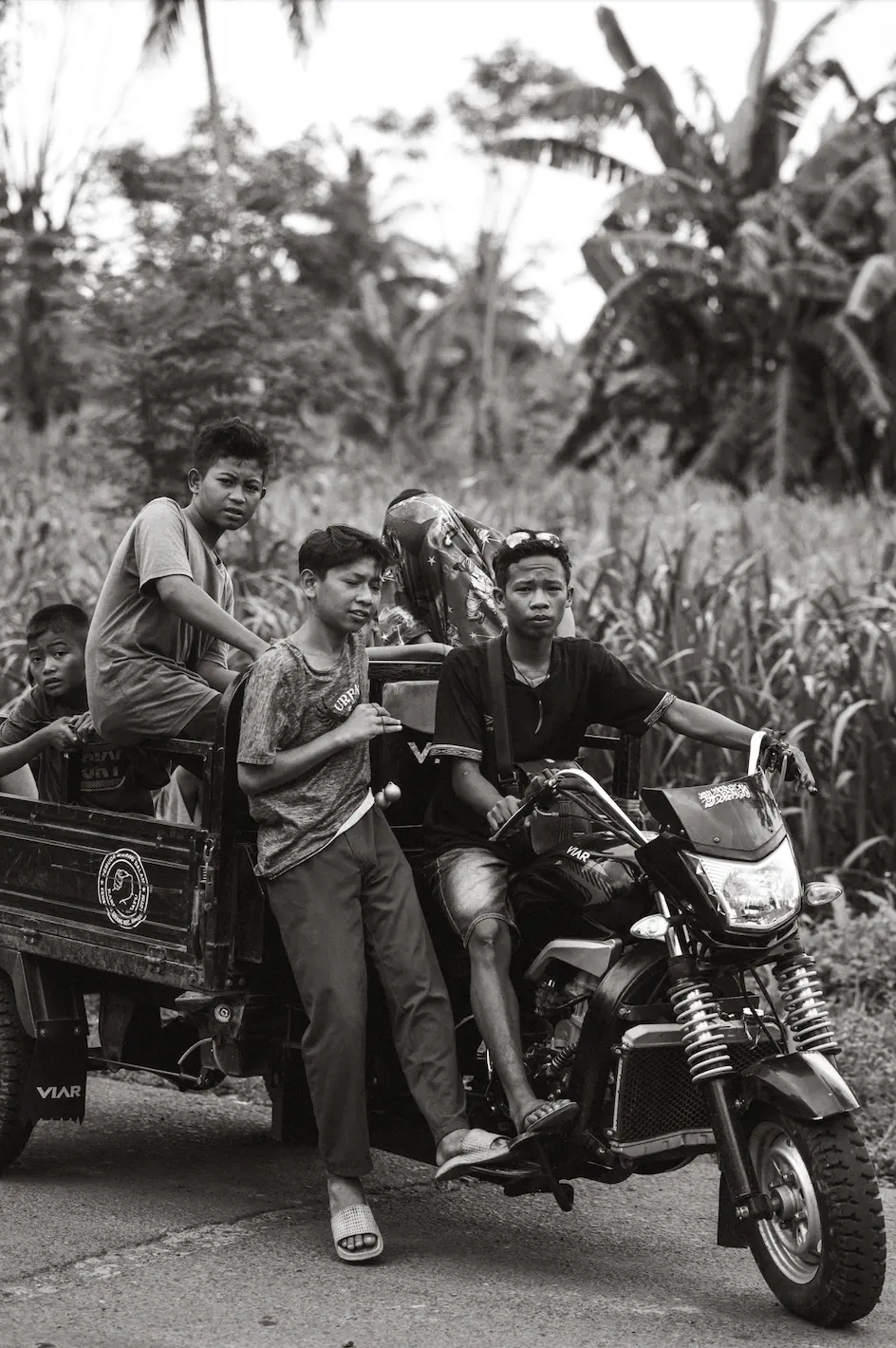
Seemingly stranded on a small Cassava farm somewhere deep in Indonesia with a man who vowed to show me “the real Indonesia”, the weight of my camera gear was getting heavy, and the blazing heat and beading sweat running down my neck was getting to me when an older gentleman, a farmer I accurately assumed, invited me over for tea. A quite sweet orange tea that felt peculiar for me as a European to drink on a blistering hot day, but he was kind to offer it, so I sipped.
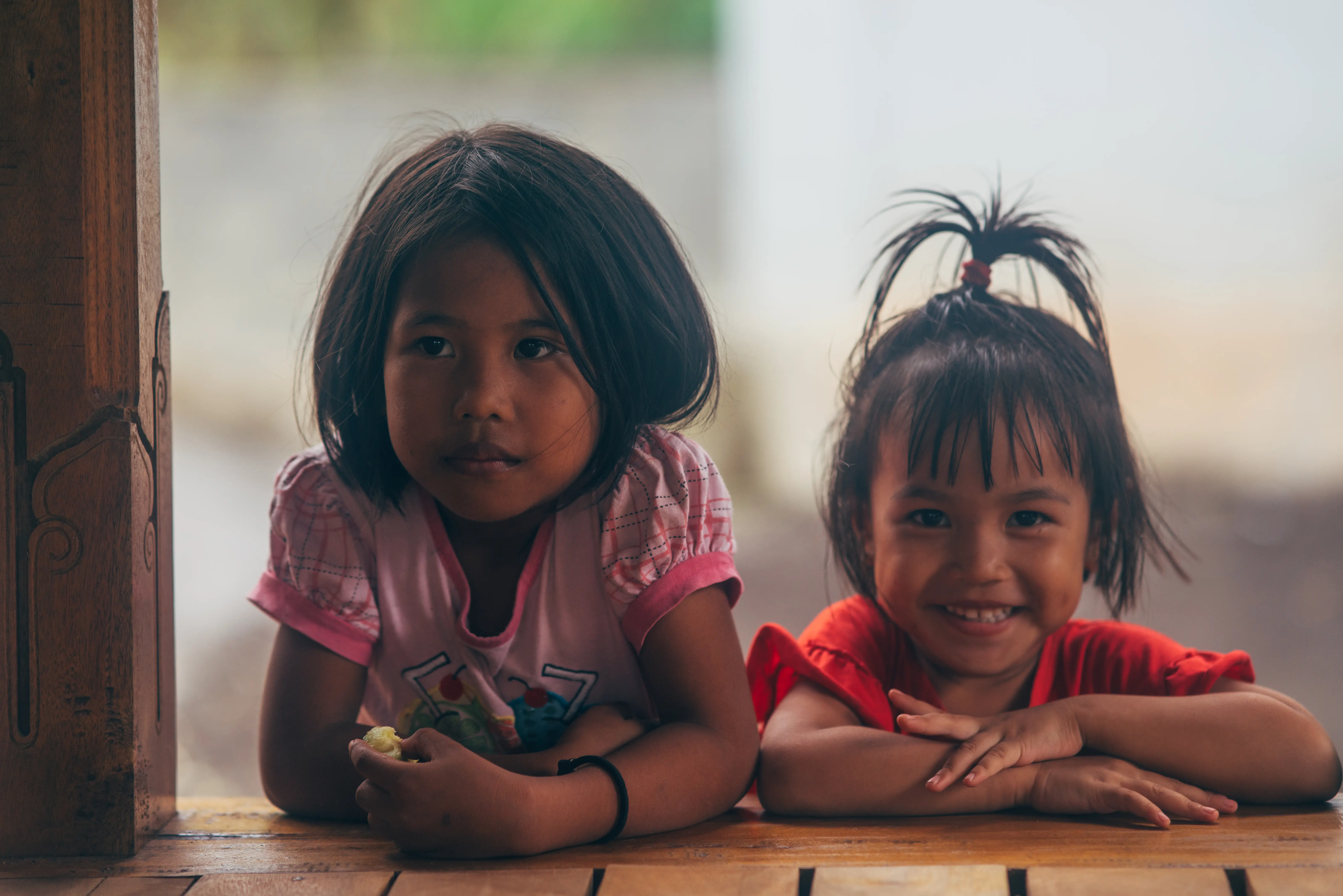
They asked about my camera, and my trusty guide explained that I was on an adventure to discover the seemingly unknown (to the west) parts of the country. He was glad to show me his farm and his home. Following me around were three little girls, no older than 6 years old, galloping around me and asking me questions in a language I sadly couldn’t reciprocate much of an answer to. I understood when the farmer laughed and pointed at my camera strapped beside my shoulder that the children were curious about it, and that must have been the subject of their interest. They were more than happy to take it off my hands!
A wild laughter ensued from the adults as the kids were playing around with my gear, and then, as the oldest gave me back my camera, she gestured for a picture. I took her portrait and her sisters, too. We laughed and smiled together in such a way that one must when language and culture seem to limit much communication.
And then I took a picture of the youngest of the three, almost out of pure instinct, and as I gazed at my small LCD on the back of my camera, I noticed she hid part of her face behind a wooden post. When I took a glance at her, she seemed almost offended. The parents who had given me consent to take their portraits brushed it off, and the two other sisters wanted to continue our little impromptu photoshoot, but I saw in her eyes that I had done something wrong.
As Beverly Joubert, National Geographic photographer, once said: “The ethics of photography are the same as the ethics of life.” I say to you now: don’t ruin their moment in order to capture yours.
I had taken some great shots. I had followed the rules I had been taught to abide by for many years. My composition was correct, my focus was tack sharp, and yet I couldn’t help but feel uneasy. I had only ever been taught the technical side of photography. That was seemingly where my photographic education had ended. I had to ask myself: was it worth taking the “perfect shot” if it made that person uncomfortable?
Someplace between Mataram and Tetebatu, Indonesia, I changed my outlook on what it means to take a portrait.
What follows isn’t a guide. It’s a series of events, some glamorous, others not so much, moments I handled well and some I didn’t. What I aim to achieve isn’t a moral lesson or a technical one, but rather the mindset and thinking that occurs before the image is taken. I’ll be diving into some of my images, examining what made them earned, what made me almost not press the shutter, and a moment I decided not to capture and chose to keep solely as a memory.
Contents
- The Difference Between Earned and Taken
- Before the Camera Comes Up
- The Moment of Consent Is Not a Checkbox
- A Portrait That Was Earned
- A Portrait That Almost Felt Taken
- A Moment I Chose Not to Photograph
- Distance, Lenses, and Physical Proximity
- When Photography Becomes Extraction
- Cultural Context Matters More Than Confidence
- How to Develop the Judgment to Earn Portraits
- Take Away
The Difference Between Earned and Taken
When the time inevitably comes for me to make a high-quality print, you may think that I would choose the sharpest image or perhaps one with outstanding lighting and tone. You would be wrong. Some certainly are sharp, and I do pride myself on capturing images with good light, but those criteria are merely trivial.
Taking an image of someone is a very personal act between one or multiple individuals. When it comes time to print and display my work, I must ask myself: Is the person in the frame actually there? Can I feel their presence? Did I only photograph someone, or did I meet them? A connection was either formed between us, or it wasn’t. Either way, the camera captures both. This difference can’t be fixed in post or even in camera. The work required is done before I ever bring my camera to my face. It’s body language, relational awareness, and so much more.
The Subtle Signals You Can Feel, Even If You Can’t Name Them
I’ve had the pleasure of being in the presence of great photographers at work, and also the unfortunate presence of what I like to call fast-food photographers. Travel photography may feel hot, fast, and exhilarating, but it shouldn’t be rushed, even if it feels that way. The fast food photographers weren’t looking or seeing but merely scanning for new faces, moving on to the next “target” before the person could even process that their picture had been taken. I have witnessed this in many food markets in Southeast Asia, where this behaviour is all too common.
There is nothing wrong with time constraints or fast shooting, but the question I often come back to is: Is this person okay with me being here? In their personal space, at their workplace? If I slowed down and showed them, would they smile? Are they relaxed or guarded? Am I a wanted presence or a nuisance in their way? These are the subtle yet important thoughts that run through my mind before my camera ever comes up. These things I have learnt through multiple situations and encounters. They did not come naturally. None of it does. Don’t be a fast food photographer.
Why Technique Can Hide a Relational Failure
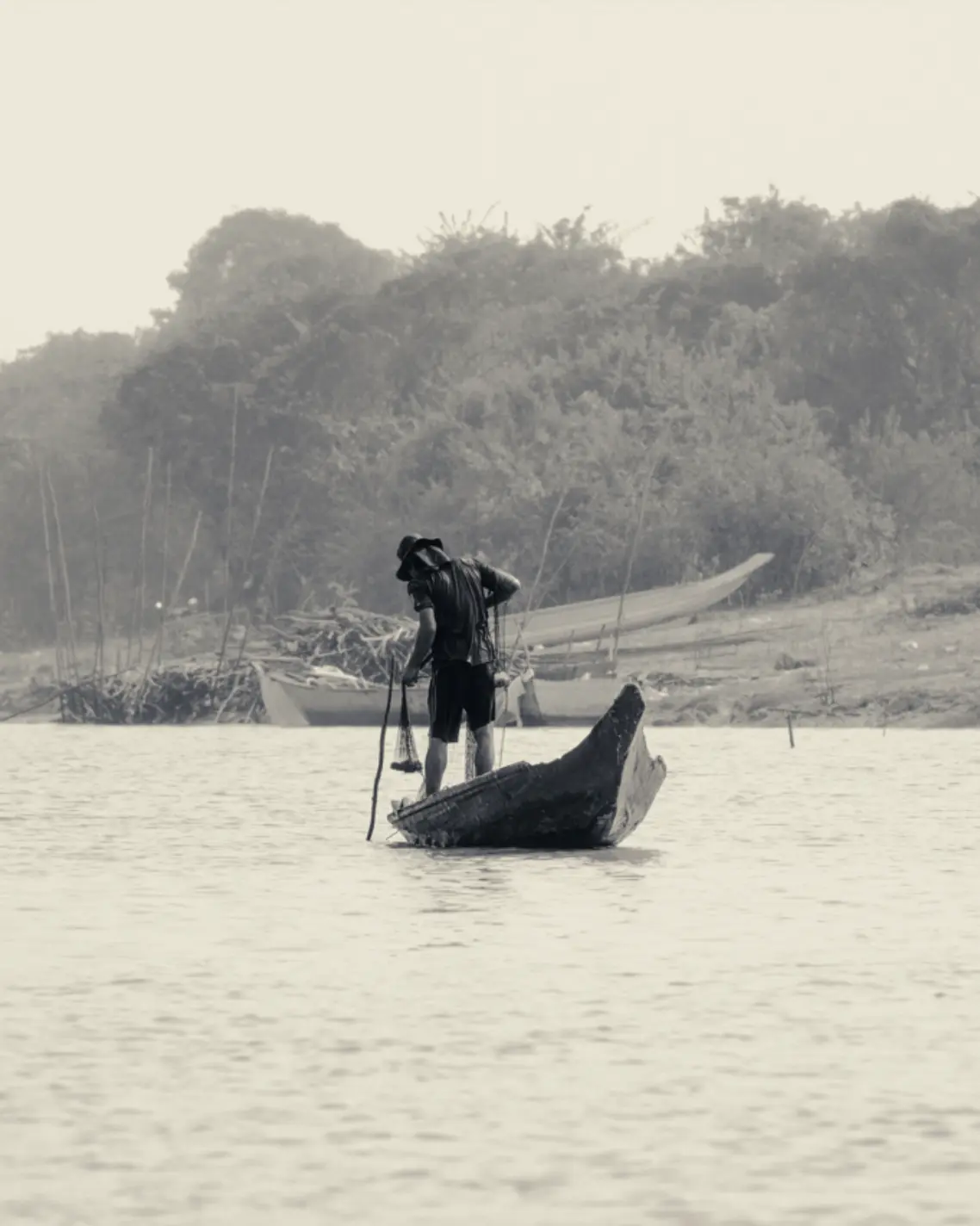
I was in a small fishing village on the island of Lombok, somewhere around 2022, when I took a beautiful, crisp image of a fisherman by the shore. Sure, I was happy about the shot for a short while, but then what? It didn’t have any substance or story. I hadn’t taken the time to learn about my environment or subject. I didn’t give my image any reason to exist or any certifiable reason for anyone to give a damn.
In that moment, I took the shot and walked away like a pickpocket who happened to own a camera. I know what that photo was worth, which is nothing, and that’s the problem. The sunset lighting was good, and the image was sharp, but none of that saved the final image.
Before the Camera Comes Up
My best portraits rarely come from places I casually visited once. They came from places I was drawn to keep going back to, places where I wanted to integrate myself and learn more than what my eyes can see: culture, history, and local language. In such a place, people stop seeing me as a tourist, and that is when trust can begin to build between those communities and me. Cambodia taught me that more than anywhere else ever could.
Having chosen to stay for the better part of 10 months, I learnt a thing or two about their traditions and history, but I’m also proud to say that I learnt how to speak light conversational Khmer, the beautiful language of the people of Cambodia. This helped me tremendously, and I would recommend everyone to learn a few key phrases before landing in another country for the first time.
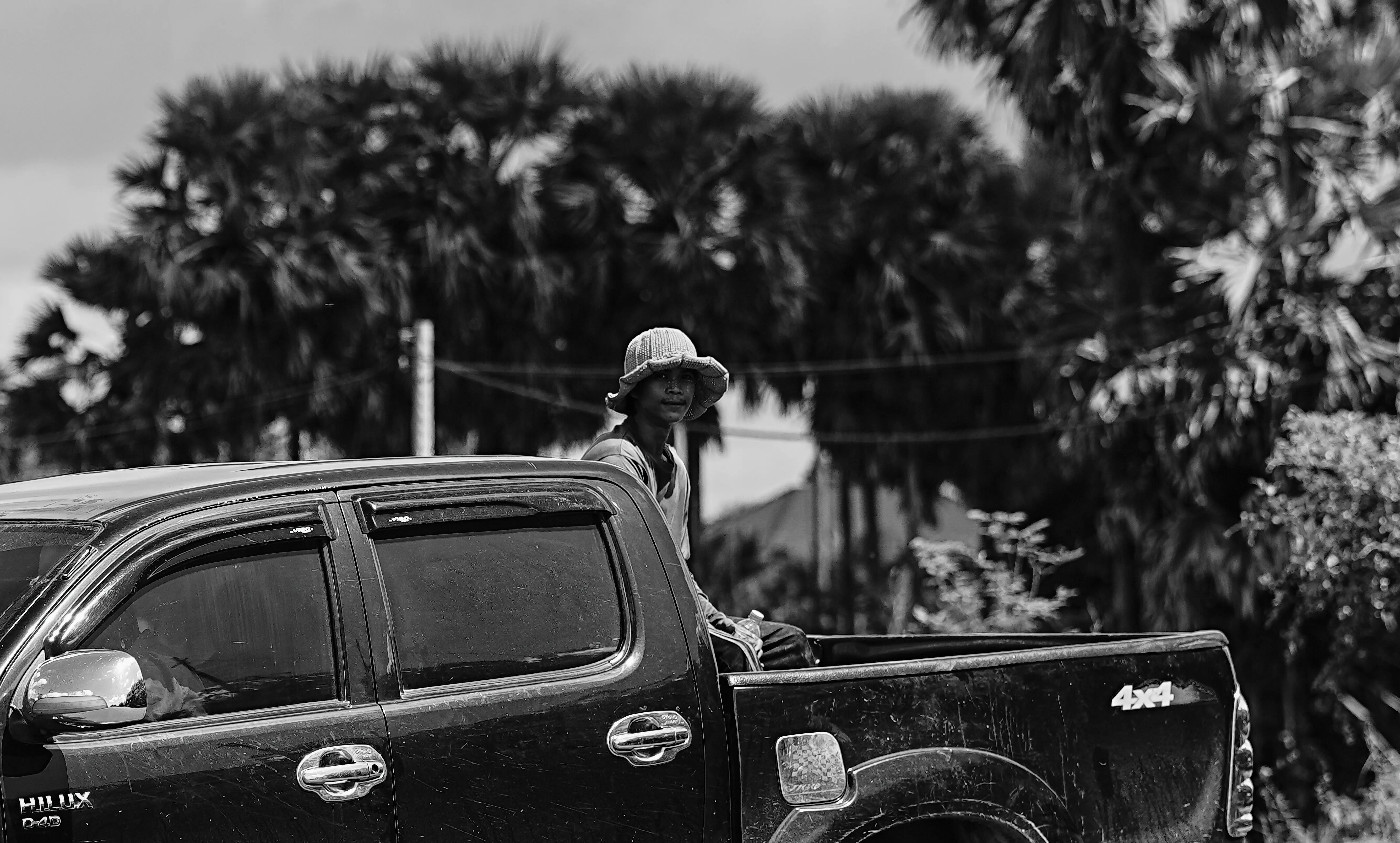
I recall the days I would take my small, beaten-up Honda around the rice terraces on the outskirts of Siem Reap, taking pictures of the landscapes. On a particularly harsh sunny day, I was watching the rice harvest when a farmer waved me down. He and a few colleagues were in the shade, taking a smoke break, when he greeted me in English. With a smile and poor confidence, I replied: “Sok sabai bong” (how are you?). The laughter that ensued was real and needed no translation.
We talked about where I was from and how long my trip would last, and chatted about the current harvest. When the mood felt right, I gestured towards my camera and asked if I could take their picture, and nobody hesitated. The image is one of my favourite black and white prints. Take that, fast food photographers!
Reading the Room, and Yourself
All photographers have within them an immense curiosity. It’s arguably what drew us into this art form to begin with. But with something as intimate as travel photography, and in this case specifically travel portraits, curiosity isn’t enough. Common sense has to accompany it.
Before I approach someone, I must ask myself: am I genuinely interested in this person or this scene? Does it evoke something, or am I merely collecting another picture for the gallery of useless photos never to be looked at again? Is this my moment to enter at all?
A monk in prayer would not be the wisest time to ask for his picture. I can always walk around the neighbourhood and come back when he is done. The likelihood of his accepting having his portrait taken will certainly go up if I respect his time and space. Curiosity does not grant access. Human empathy and common sense will.
The Decision to Approach, or Not
If something in your gut tells you that your presence would cost more than your image is worth, put the camera away and walk. People deserve their dignity. No image is worth that.
The Moment of Consent Is Not a Checkbox
People don’t always know how to react when a stranger has a camera on them, would you? Adding the language barrier to the mix can sometimes end in a misunderstanding. A yes can mean “I was raised to be polite and don’t want to be rude to a foreigner visiting my country,” and it can also mean “yes, of course I want my picture taken!” I’ve experienced both for an embarrassingly long time before I figured it out. The tension between what somebody wants and what they say is where so many travel portraits go wrong.
Consent is something I hear, see, read, and feel from another person, and it is earned throughout the entire encounter. Did you stop paying attention? You don’t deserve to be there.
Verbal Permission vs Emotional Permission
I had a brief stint working in sales, so trust me, I know how to get the yes. But in photography, I find that leads to hollow results, and I’m not looking for that. I crave authenticity and a real connection to my fellow man or woman.
Forget the words. Watch the body. Are they waiting for this to be over with? I find that a smile goes a long way. A reciprocal exchange of pearly whites is usually a good indication that someone is fine with your presence. The shoulders are relaxed, smiles have been exchanged, and off goes the shutter. I show them the image and others like it to reassure them I am who I claim to be. We both leave with the same smile on our faces.
A practical note worth mentioning: shooting someone in a public space is generally legal in most countries, but using that image commercially is an entirely different conversation. Please do your due diligence when travelling to another country as to their laws on public and commercial use of photography and people’s rights in a public setting. In France, where I am from, the droit à l’image means that portrait rights are taken more seriously than in most countries. Japan may also be stricter than you expect. When in doubt, ask. When still in doubt, don’t.
How to Slow Down the Interaction
The fast food photographer finds his prey and sprays the shutter only to disappear moments later. I don’t do that. I’m proud of what I do and have no qualms showing that off to the people nearest me, in this case, the individual whose portrait I just took.
I will, on occasion, carry with me a Fujifilm Instax printer in order to directly give the person who was gracious enough to be my subject a little memento. It goes a long way. And if I don’t have my handy little printer on hand, then asking about their work or their story, even talking about the weather, in that moment, the picture belongs to both of us.
What You Do After the Click Changes the Meaning
The last moments are as important as the first. A little appreciation for their time is, by all accounts, the right thing to do. Are they selling some fruit? Well then, I’m hungry! A small gesture of good faith. I didn’t travel halfway across the world to be stuck up. Decency costs little to nothing.
A Portrait That Was Earned
This portrait takes place in Siem Reap province in a small fishing village near the coast of Tonle Sap Lake, the largest freshwater lake of Southeast Asia. Having spent the day on the lake, I was driving back and needed a small break for some water and to stretch my legs. Upon purchasing my goods, the family who ran the small store greeted me with warm hospitality, aunts and uncles, cousins, and grandparents, and a beautiful chaos of young children running around. Most wanted their picture taken after noticing my camera around my neck, and in the way most children are, they were not subtle about making it known. A joyful riot I was more than happy to play along to.
As I was taking portraits of the family one by one, I noticed in the background a quiet yet curious young woman, the oldest of the children, taking care of her energetic younger siblings. She noticed my presence, but she said nothing. After all was said and done, I was preparing to hit the open road, and quickly too, as the afternoon sun was quickly morphing into evening. Before I left, I hesitated and turned back. I asked the young lady simply if, like her brothers and sisters, she would like to have her picture taken. She was delighted.
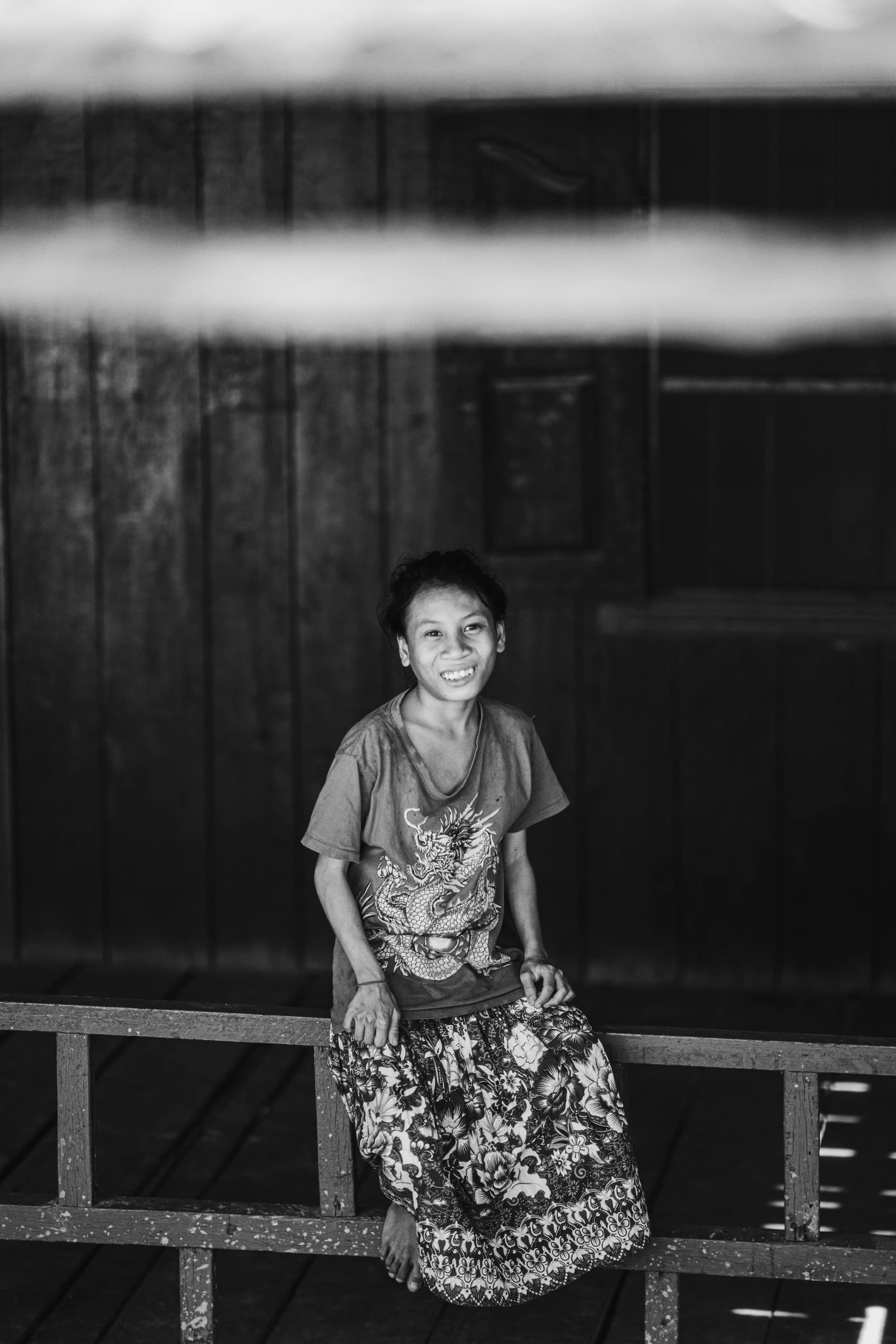
What makes this image special is not only that she wanted to have her image taken, but she also insisted on where. She chose to sit in front of the traditional wooden Khmer house. I decided nothing. She settled onto the railing and gave me a smile as she looked up. One shot was all it took.
What makes this image is everything that was excluded: the chaos of the younger children, the road beside us. In this moment, she was not only an older sibling and a caretaker. For this brief instant, she was the star of the show, and I like to think that gave her as much joy as it gave to me. This story isn’t deep, and the image is rather compositionally simple, but if you take the time to look at her eyes and her body language, surrounded simply by background elements of her culture and being at ease in front of my lens, you will understand this image is about being noticed.
To me, this image checks every box of what I have been saying during this article. I read the room, I didn’t hunt for an image, I took my time, and I let the moment unfold with grace and character. No cheap and hollow results. No empty calories.
A Portrait That Almost Felt Taken
When one thinks of travel portraiture, the country of Ireland doesn’t usually come to mind, and yet it is where I have found some of the fiercest local pride and diverse characters. A small country with a rich culture, sense of identity, and even richer history.
I have found in my experience that the most extraordinary characters exist in the most mundane of places, sometimes right at your own bus stop. The southern port city of Cork is where this portrait was taken.
I heard them before I saw them. A motorcycle gang rolled in and parked right beside me. The roaring engines, leather jackets, and attitude allured me, instantly drawing attention. I had spent the afternoon practising my street photography to no avail; the images I took were stale and without substance. It was when I was ready to let my guard down and call it a day at the bus stop that luck essentially drew its wonderful face towards me. Luck loves preparation and patience above all, especially in photography, where one must prepare at all times for luck or disappointment.
As I decided to approach them, I decided to start with the bikes. Asked about those machines, showed genuine interest, and let the conversation breathe like a good wine. They started warming up to me, and that’s when I asked to take pictures of their bikes and then a few portraits. Most said yes without much hesitation.
Then came Mr AK47, fully tattooed from head to chin, and an Irish flag stitched into his leather jacket. This was my man. My Irish portrait. The line between knowing and not knowing is sometimes razor-thin. I was far from home, surrounded by a cloud of cigarette smoke and menacing stares, the kind of look that subtly says “watch your back, kid.”
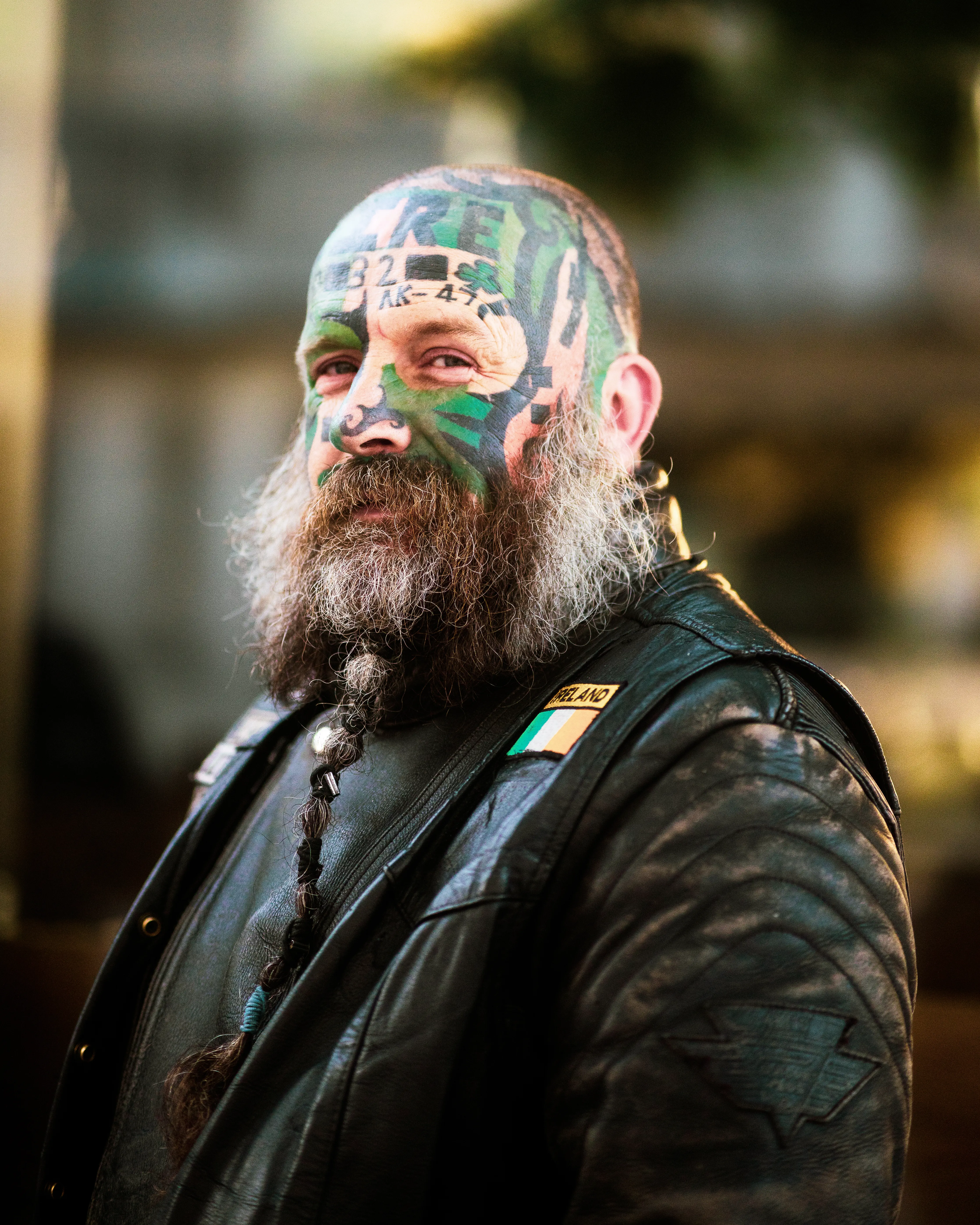
I approached Mr. AK47 and simply asked, after I had taken all the other portraits, if I could take his. This took the pressure off me immensely as his friends had essentially already vouched for me. And he simply gave me a loud grunt. A grunt is not a yes, and I knew it. I took the shot.
I could not have known his intentions. I like to believe that many in my situation would have rather protected themselves by moving on, like maybe not missing the bus home. But I really wanted my Irish portrait, and boy did I get it. I removed everything around him, the gang, the street, the city itself. Just him against a blurred background, clean and simple. Whether that was intentional or just instinct, I am honestly not sure. The line between a yes and a no is sometimes a grunt. I had to take that leap of faith.
This image almost felt taken because I over-prioritised getting the portrait over knowing whether or not I was truly welcome to. I was lucky to get away with a grunt, but maybe others wouldn’t have. The lesson in this portrait isn’t that a grunt is a yes. It’s that uncertainty and discomfort are major factors in travel portraiture, and it is important to have that awareness.
A Moment I Chose Not to Photograph
This breakdown is unique as it contains no portrait, but rather an image I chose not to take. And here’s why. In the heat of the moment, sometimes the best decision I could make is not to take the shot. That’s not a weakness but rather a unique strength. What follows is a moment I chose to keep in my mind’s eye and no one else’s.
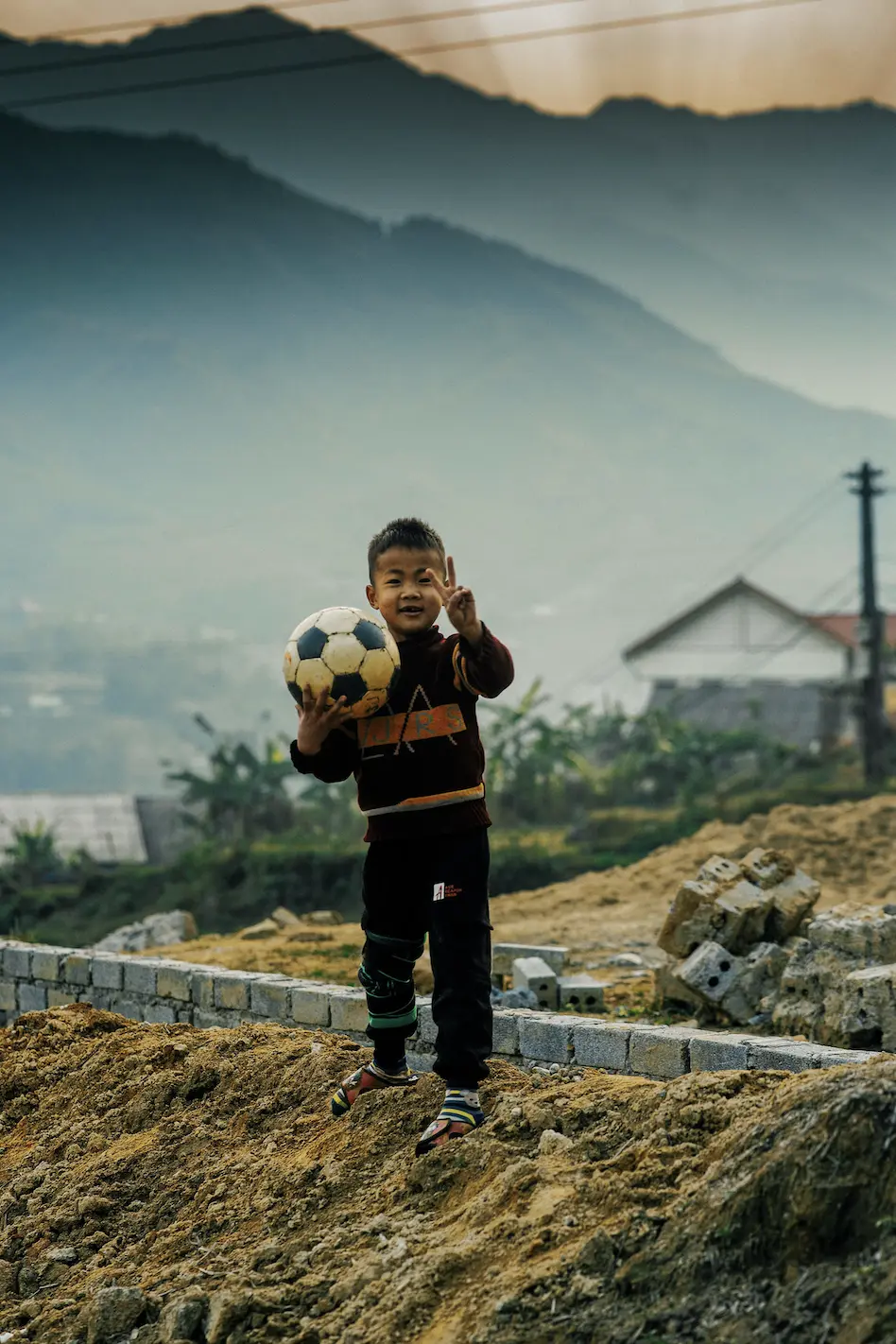
Flying to Indonesia resulted in an insane 19-hour layover in Ho Chi Minh City, Vietnam. I hadn’t slept, and my body was not exactly used to the heat and humidity that Southeast Asia had ready for me. Whether or not it was a good idea for my sleep-deprived self to venture outside the airport, I did. I was immediately overcome with a wave of noise, colours, and the dancing chaos of one of the most electric cities. The heat hit me like a train with sweat beading down my back and a camera around my neck, nowhere better to be for the next few hours. So I walked.
At some point, I arrived in a pretty run-down neighbourhood and came across an elderly woman on a busy street corner. She was begging, hunched over with what I suspect was kyphosis. She was entirely swallowed by the busy city, moving around her with indifference. Behind her was a beautifully powerful view of the modern city skyscrapers of Ho Chi Minh. The contrast was hard to miss, and it was obvious to me that this would be a powerful portrait.
I raised my camera, and then I lowered it. Because I chose to see her, really saw her, and I thought of how tough her day probably was. What would it feel like if we switched places? She was already vulnerable. Did she really need to have a foreign stranger point a camera at her face in what must be her lowest moments, and the shame that might follow? She was living a story that she perhaps wouldn’t agree to tell, and I, as a fellow human being, had to respect that.
I was stressed from flying, sleep-deprived, and on a time crunch. I did not have the time to have a deep conversation and gather her story. I would have walked away with a technically striking image that surely would have garnered a lot of social media attention, but nothing else. Hollow to the core. I kept walking and decided to grab a cab back to the airport.
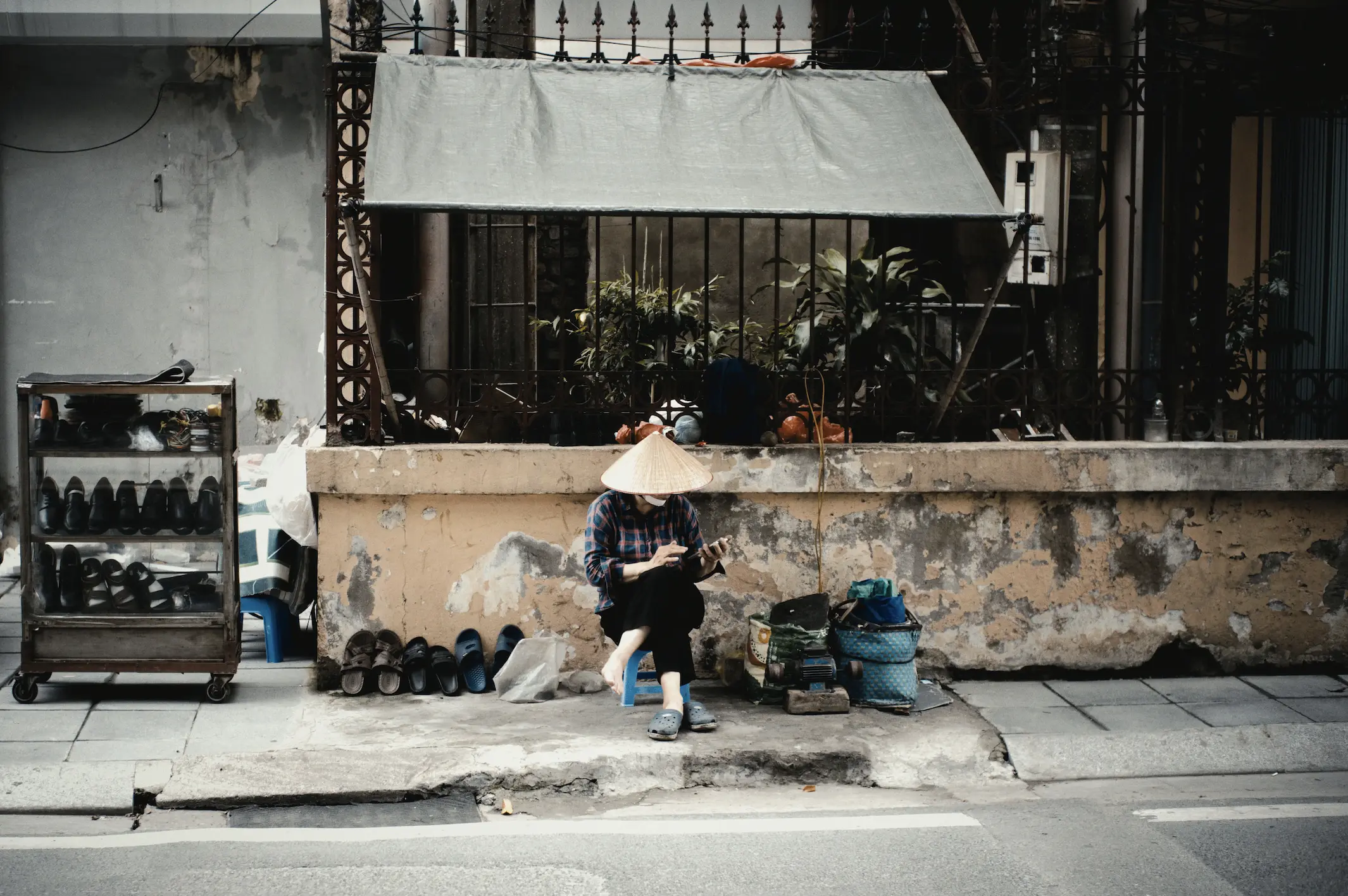
Some moments don’t need to be captured. Fetishising poverty in a developing country isn’t travel photography. This was not a difficult decision in hindsight. It was a human one. The camera is a powerful tool, but to me, it is nothing without empathy.
Distance, Lenses, and Physical Proximity
My choice of lens and focal length isn’t purely a technical decision; it’s also a relational one. With or without words, the distance between you and your subject tells part of the story, whether voluntary or not. This is not a gear section. The internet has plenty of those. What I want to talk about is what your physical lens choices say to the person on the other side of the camera.
When a Long Lens Protects and When It Hides
In 1984, National Geographic photographer Steve McCurry captured the portrait of Sharbat Gula, known as the Afghan Girl, arguably one of the most recognisable travel portraits ever taken. It was shot on a 105mm lens in a refugee camp in Pakistan. That choice of a tighter focal length was not avoidance or shyness but rather afforded him sensitivity. A refugee camp in a war zone on the other side of the world, honestly, that longer lens was the right call. Decades later, Sharbat Gula has expressed discomfort with the global attention that the portrait brought her, and so even one of the greatest travel portraits ever made is not above the questions this article has been asking.
I have used a wide variety of lenses, some well and others badly. The real difference in a portrait is intent. When I use a telephoto, it is often when the situation calls for a bit of distance, a quiet moment, or someone who needs space. That is when a longer focal length serves you. I’m also a sucker for beautiful background compression, when everything in the background seems to merge together, and distance becomes an illusion, my subject taking up most of the frame.
Why Eye-Level Changes the Power Dynamic
I’m not a psychology major, but I will tell you that when you’ve taken as many portraits as I have, you learn a thing or two about power dynamics. Shooting down at someone is easy, especially when they are shorter or sitting, and the camera usually goes where your eye naturally falls. But from a compositional and relational standpoint, it puts you above your subject. I don’t like that. I make a habit of lowering myself to their level, a real shame for my knees, but a price I’m willing to pay. That simple gesture can say: I see you as my equal in this moment. If they can feel that, then you can feel it when it shows up on the print.
A Note for Beginners on Focal Length
A 35mm or 50mm lens will teach you a lot about travel portraiture, not because it produces better images, but because it requires you to get closer to your subject. Telephoto lenses have their place, and my personal preference is indeed an 85mm, but the wider focal length requires closer proximity. That proximity builds connection and helps build a story.
When Photography Becomes Extraction
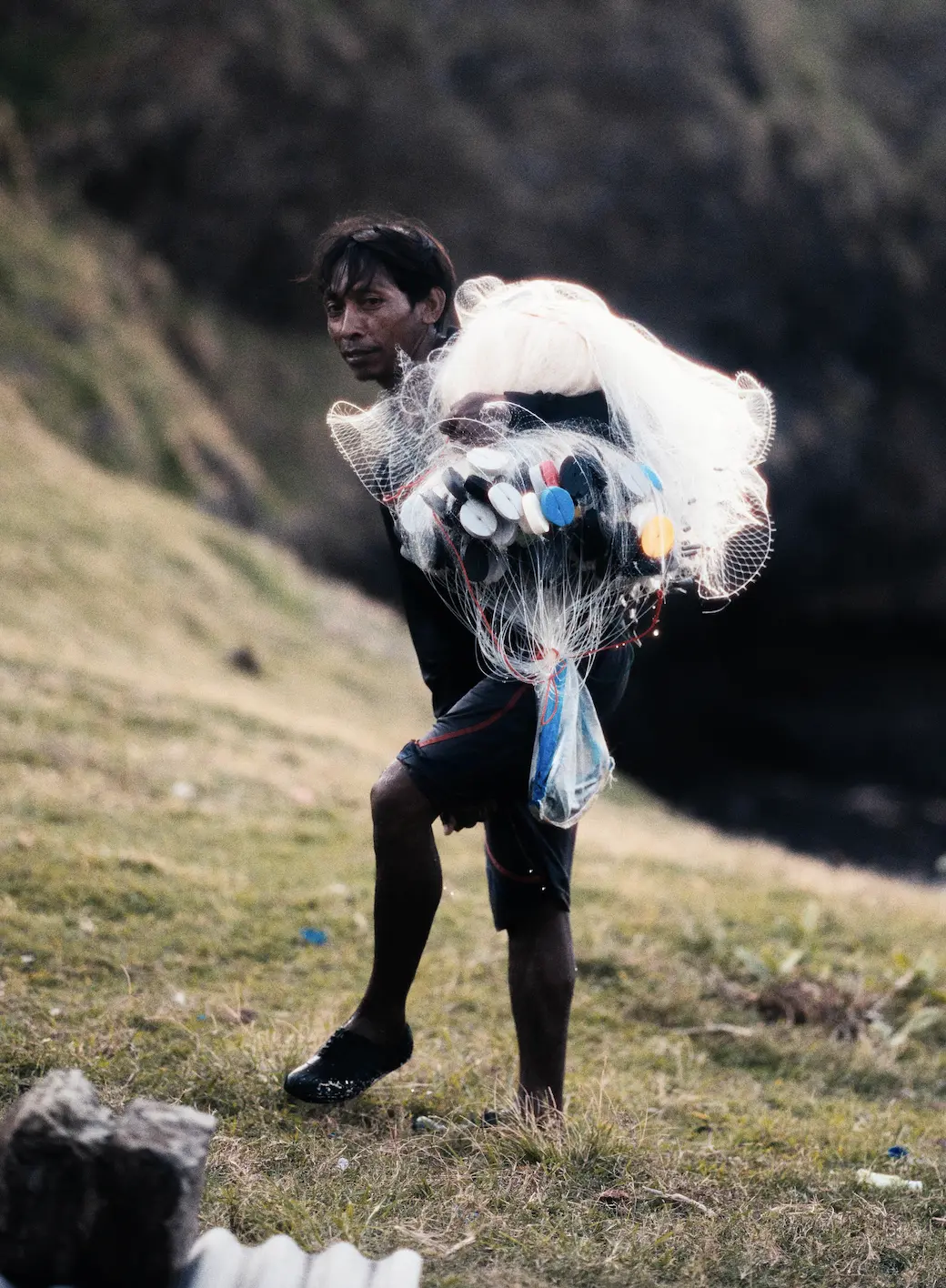
While conducting research for this article, I came across the story of Inle Lake in Myanmar, a place where fishermen for generations worked the water tirelessly, earning their livelihoods. What makes this relevant? The fishermen have largely stopped fishing altogether. They now pose in traditional garments on tourist boats. The aesthetics of their ancient lifestyle is now more lucrative than the life itself.
It should come as no surprise that this location is a hotspot for the fast-food photographer. Decades of photographers coming to collect their shots have created a literal shift in the local economy, and we as travel photographers are responsible for this shift. This is a version of photography that has little to do with connection, collaboration, or any of the many things I have been talking about in this article.
It is solely transactional, fast, and extractive, an empty image among an ocean of pictures of little substance. This is far more common than most photographers would care to admit. I am not immune to it either, and neither are you.
A fast food photographer, or collector, is someone who treats people like objects to acquire rather than humans to connect with. They move fast through markets, villages, and streets, shutter firing, already looking for the next face before the current person has processed what happened. They check permission as a formality, a quick gesture or nod without any real interaction. They are interested in the image of a person, not the person themselves. They measure success by quantity: how many faces, how many locations, how many countries. They move on immediately after the shot, showing no image, no conversation, no acknowledgment. They are essentially tourists of other people’s lives.
The Collector Mindset
You have travelled all this way planning to get certain images. From the inside, it feels like productivity. You are moving and being efficient. The moment the shutter fires, you are already looking for the next person. Permission and formality have become a simple transaction, and a genuine human connection has fallen by the wayside. These people have become inventory to fill your SD card with. That is no way to travel and meet people. This is the collector mindset. I have felt the pull on some days. Most honest photographers have.
The Impact You Don’t See in the Frame
Over the years, in heavily photographed communities, I see performance where there once was authenticity. People have learned to give tourists exactly what they want because it is often easier than resisting. The image you take today is one of thousands that a person will endure. That is definitely worth remembering before you raise your camera.
Cultural Context Matters More Than Confidence
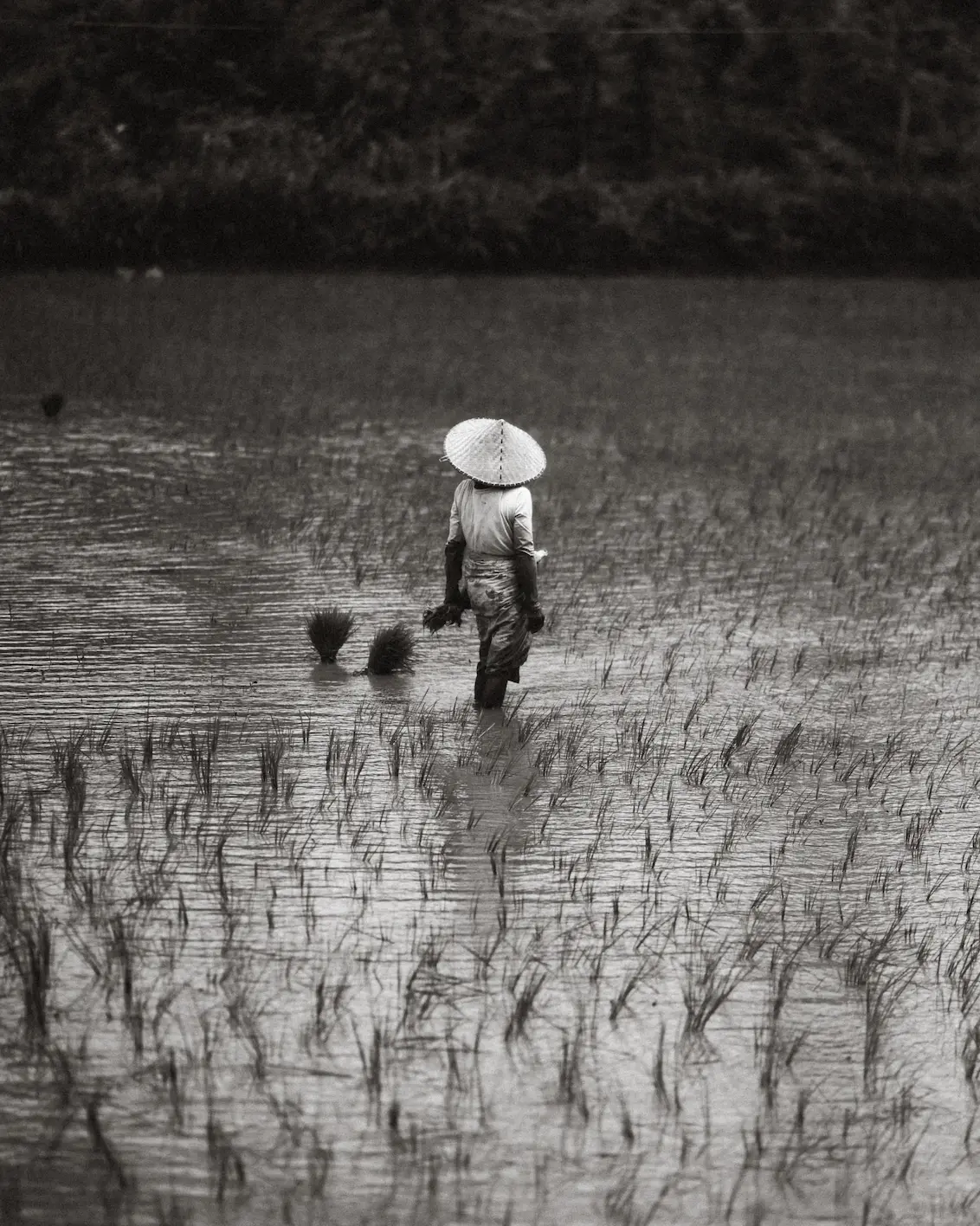
Throughout my travels, I have learnt the harsh lesson that confidence will only take me so far. Knowing when to use it is what separates someone who is welcomed into a moment from someone who forces their way in. I have experienced this, moments I assumed I would gain access to purely because of my confidence, and as soon as I raised my camera, I was welcomed by turned backs, closed doors, a moment drained and never to be seen again because my overly confident self assumed access without earning it.
Every place I have visited has its own written and unwritten rules surrounding photography, and I can say that none of them mention follower count. Learn the rules and customs, and you will find more doors will open for you.
Why Research Is a Form of Respect
Learn some Spanish and watch your Latin friend’s face light up as you greet them in their mother tongue. Learn the vast history of Turkey, and your sweet tooth will be gifted Turkish delights from your local barber. What I’m trying to evoke is that most people appreciate it when you show an interest in their culture, history, and norms. Before going anywhere, I love researching as much as I can. I want to know at least the things I shouldn’t do and what would be considered rude. I see this as the bare minimum.
For instance, I learnt a little too late that using your left hand to give food, money, or shake hands is considered rude in Indonesia, as that hand is commonly used for cleaning. What can seem friendly in your country can be very rude in another. In Cambodia, touching somebody’s head is a huge sign of disrespect because in Khmer culture, the head is the focal point of intelligence and spiritual substance. These are simple things to know to avoid a sticky situation. Better safe than sorry.
The Difference Between Curiosity and Consumption
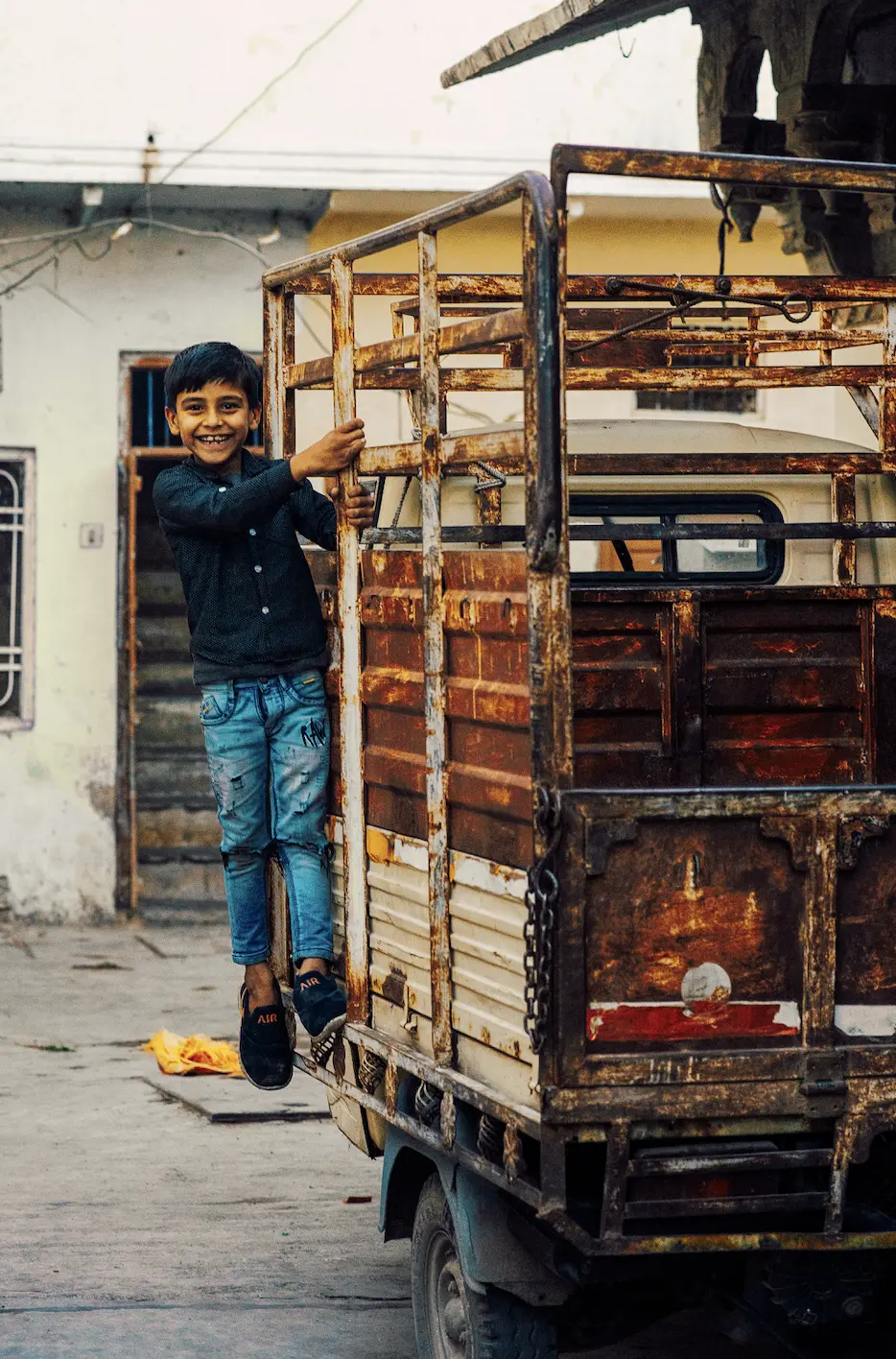
Being invited into a moment feels different from inserting yourself into one. I have been genuinely curious about places, and I have consumed them. My time in India was eye-opening; the culture shock I experienced mimics no other.
The country is so open when it comes to photography. People approach you to get their picture taken, and everyone is interested in you as opposed to you being interested in them. This made things unnervingly easy for me. For a travel portrait photographer, India can feel like paradise.
But don’t be fooled into thinking you can use it as a blank cheque for your photography. Just because a door is open doesn’t mean you were invited in. Sometimes, the guests are too kind to state that you have overstayed your welcome. In my experience, the easiest places to photograph people are sometimes the ones that require the most inner self-discipline.
How to Develop the Judgment to Earn Portraits
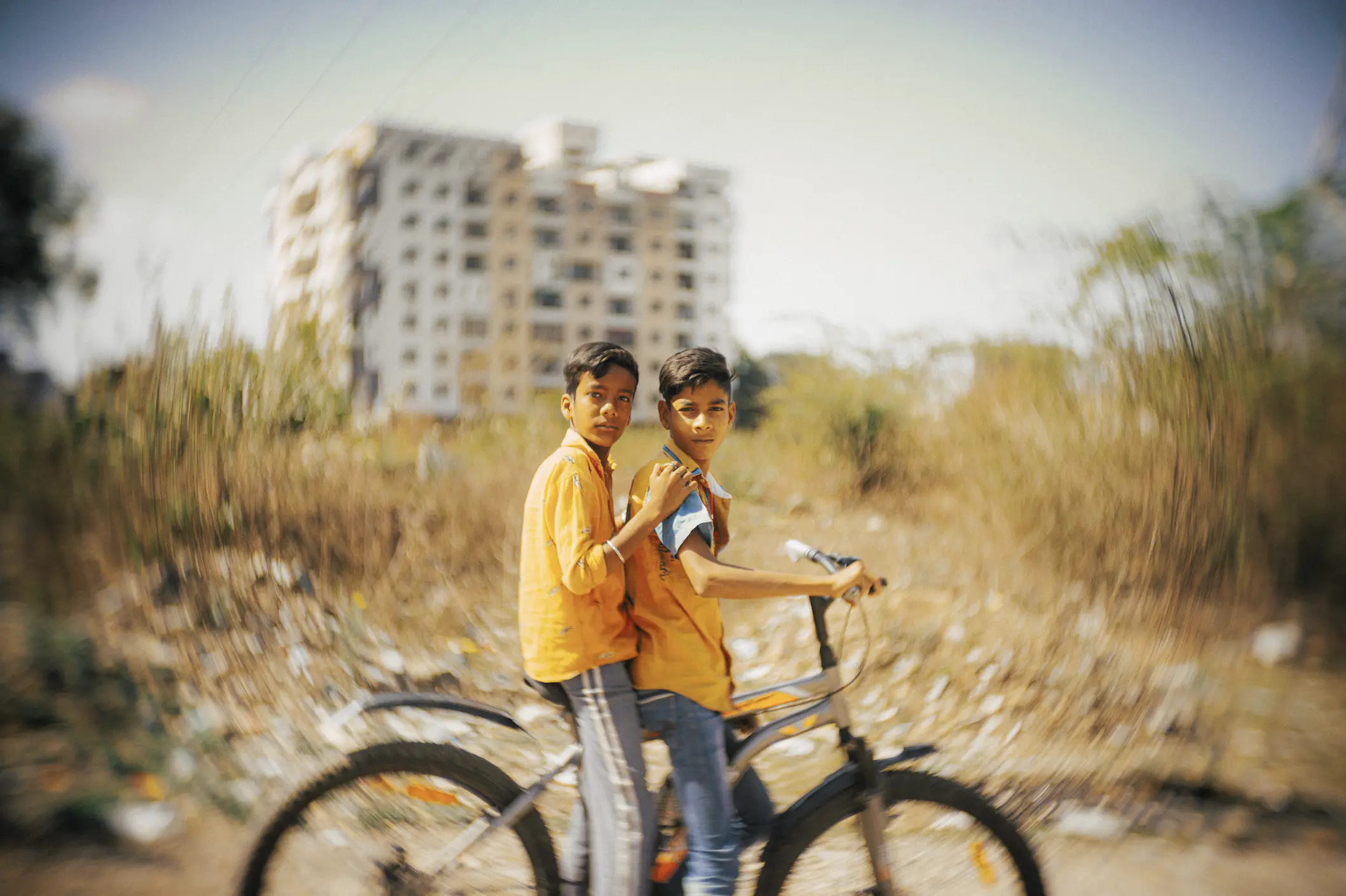
I believe good judgment cannot truly be taught in a classroom or in an article, even this one. It must accumulate slowly through experience and repeated effort.
For me, it was never about the gear, the equipment, or the exotic locations. It was about the totality of my awareness and my ability to connect with my fellow man, even when language and culture were my obstacles.
I do not let discomfort convince me that it is failure, because it’s not. Those short moments of discomfort are part of what allows me to live the life I get to lead, exploring new places, meeting interesting people, and having a never-ending education.
Sometimes things go wrong, and that will further develop your judgment in time. I am not afraid to learn from my mistakes. It is and always will be inevitable.
Spend More Time Without Shooting
Learning to wander around and learn about places with my feet instead of my head has helped me notice the rhythm of a place far more than my eyes ever could, to feel a place breathe without any inclination to capture it with a camera. This is why I like to leave the camera at home sometimes and just learn to be in a space without being a photographer.
Letting Go of Control
There have been many times when I have tried to force a portrait to appear. Those images are rarely the ones I remember, print or care to share, mainly because they are never my best ones. The ones I remember most are the ones that arrived organically, a farmer who waved me down, or the young girl on the wooden railing who chose her own spot. Moments that happened because I didn’t try to make them happen. Control produces predictable and rather bland results. I’d rather let go and have the confidence that the world will show me the ones worth taking.
Review Your Work for Emotional Presence
When first starting photography, I was more concerned with the technical aspects, sharpness, focus, noise, and much more. But as I have progressed, I find myself looking for more metaphysical qualities in my work.
I ask myself: have I captured a real emotion? My framing is my opinion; did that come out in this portrait? The answers to these questions usually surface after I’ve made the final print, and they are answers worth more to me than optical sharpness or Instagram likes.