When I first started photographing landscapes, I wandered around firing shots without much thought. Sometimes a photo worked, and most of the time it didn’t. Eventually, I realized that good photo composition isn’t always about strict rules; it’s actually about guiding the viewer naturally, the same way your own eyes move across a scene when you are standing there in person.
These are the techniques that changed the way I see the landscape as a landscape photographer. Once you understand them, the compositional elements begin popping up everywhere, almost like little hints for you to follow.
Contents
Why Composition Matters in Landscape Photography
Composition is the force behind landscape photos, and the part you don’t always notice at first, but definitely feel. Light creates mood, sure, but composition decides where your eyes go, how long they stay, and if the scene actually tells a story or feels like a random snapshot.
The Rule of Thirds – Guiding the Viewer’s Eye
If there is one composition tool that changed how I see landscapes almost overnight, it’s the rule of thirds. Imagine splitting the frame into nine boxes with two horizontal and two vertical lines, like a tic-tac-toe board. Where those lines intersect, the magic tends to happen.
Our eyes move toward these intersection points without us thinking about it. When you place something important, a tree, a person, or a bench on one of these points, the photograph immediately feels more natural and balanced. You are giving the main subject room to breathe, and the rest of the scene gets space to speak.
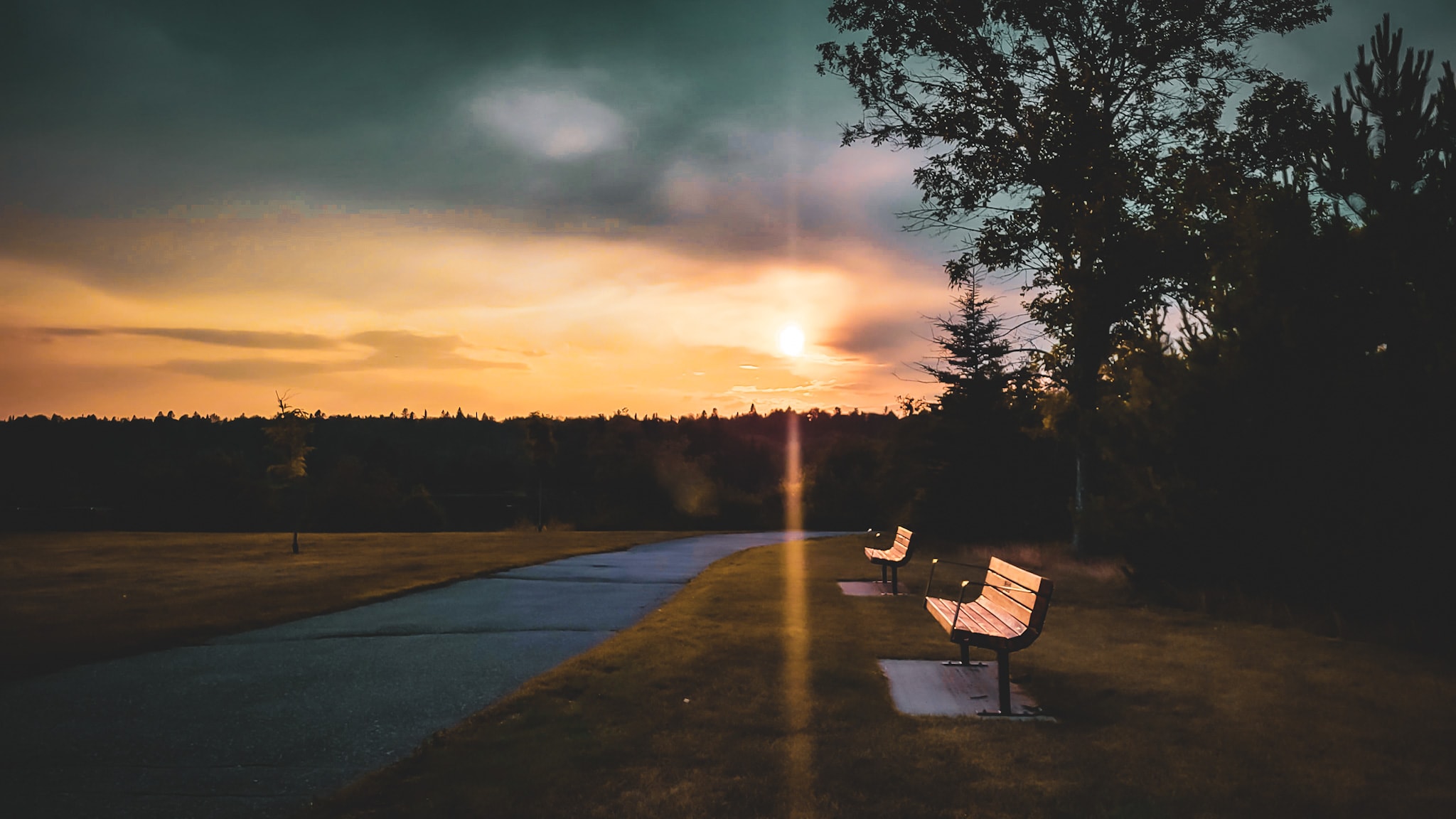
The photograph above shows a couple of park benches sitting right on one of those intersection points. Even without explaining anything, viewers looked there first, as if magnetized. Then their eyes drifted to a winding path set at another intersection, and finally wandered toward a glowing patch of sky. That layered visual flow keeps people inside the frame longer, and that’s the power of thoughtful placement.
Those benches acted as the main focal point, while the other supporting elements played quietly in the background.
Leading Lines – Directing the Journey Through the Scene
Leading lines are one of the fastest ways to add depth and movement to your images, and they show up everywhere once you know how to spot them. They are everywhere once you start noticing them: pathways, coasts, river curves, mountain ridges. Anything that naturally pulls your eyes into a photograph with lines leading toward something important.
Using leading lines creates movement, adds depth, and sometimes is enough to make a flat photo suddenly feel like a place you could step into. The viewer doesn’t just look at a scene; they travel through it, building a sense of direction and scale.
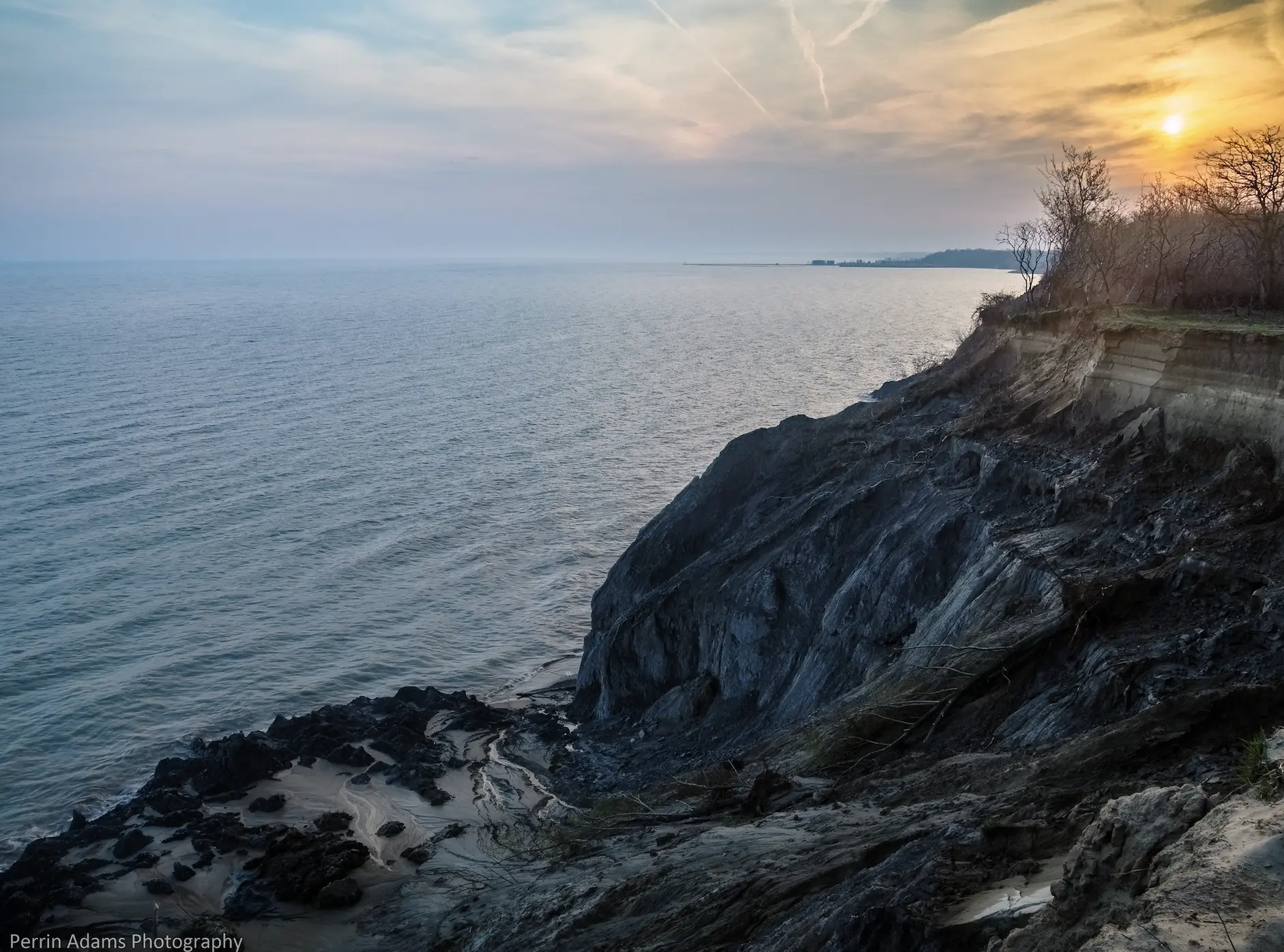
The image above is an example of a shoreline I photographed that curved gently toward the sun. Without even trying, the line guided the viewer straight to the brightest part of the image. A second, softer curve echoed the first. Even people who didn’t know the concept immediately followed those paths with their eyes, and it felt almost like the landscape was pointing at the focal point.
Framing and Symmetry – Bringing Order and Focus
The landscape has a natural way of organizing itself, and framing and symmetry help you reveal that structure. Branches, archways, and natural structures act like interesting frames inside the scene. They are subtle but powerful. When you frame your subject, you highlight it and give the viewer a clear point of entry.
Nature loves balance more than we realize. Reflections on water create mirror images that feel peaceful and structured. Symmetry pulls the viewer straight to the center and invites a longer look. The background layers above and below often echo one another, which adds to the charm.
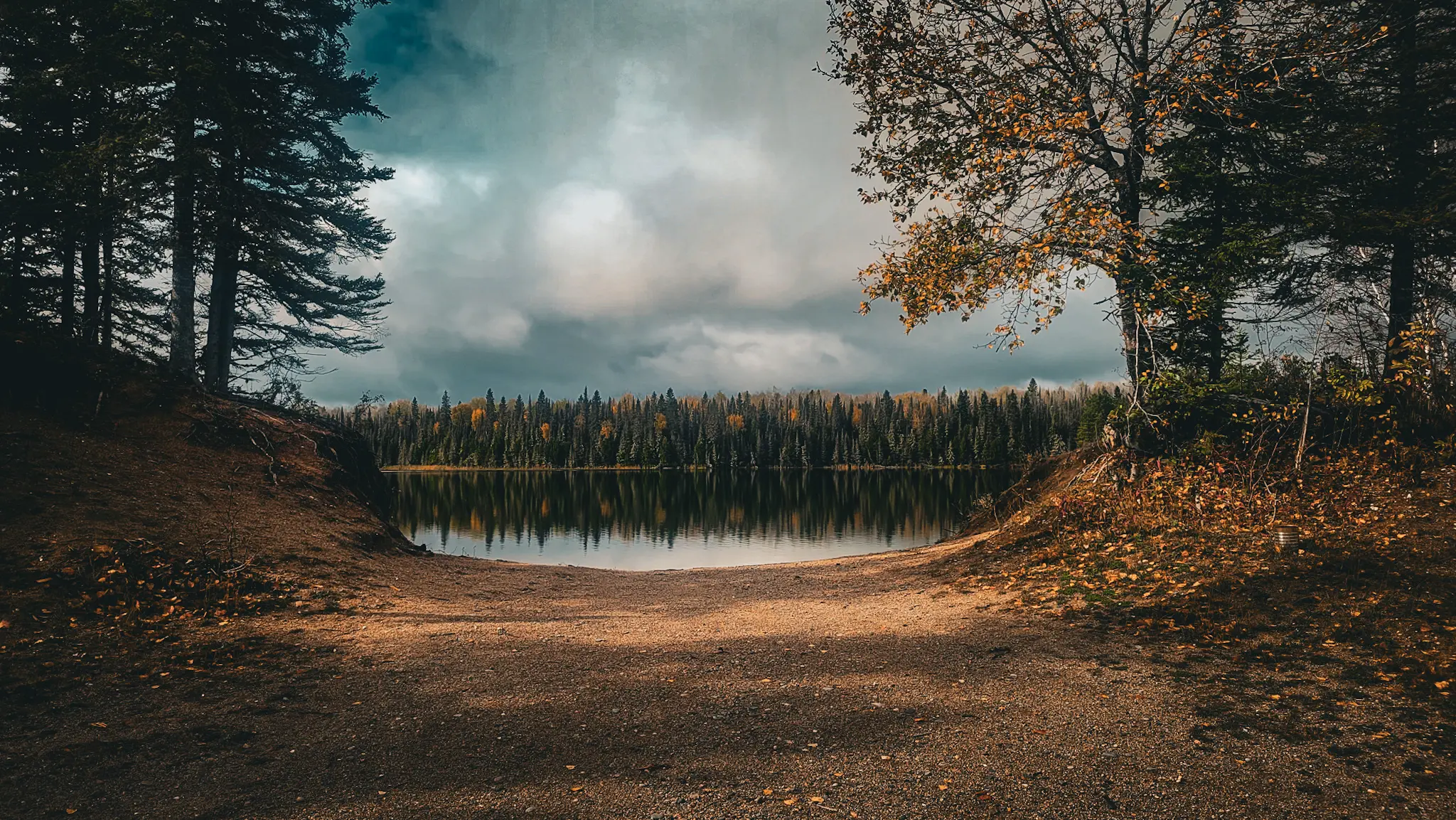
The image shown above is from a quiet lake where a wooden boat launch curved into the water like an open set of arms. Trees rose above it and reflected almost perfectly on the surface, creating a top-and-bottom twin effect. Framing and symmetry worked together so cleanly that the scene practically composed itself, a tiny lesson in how much art hides in nature. Even the rule of thirds snuck its way in.
If learning to guide the viewer’s eye feels exciting, you will love my full Landscape Composition Class, where I build these skills through hands-on examples.
Using the Foreground to Add Depth and Story
Some scenes only come alive when something in the foreground gives the viewer a place to land. The foreground is the first connection between the viewer and your scene. When there’s nothing anchoring the front of the image, the landscape can feel distant or flat. Add something like a rock, a log, a patch of textured grass, and everything suddenly opens up.
Your foreground acts as a powerful element that shapes the entire composition in landscape photography, giving visual interest and helping the scene breathe. It creates separation between the front, middle, and back of your photograph. The viewer steps onto the rock, follows the waterline, and ends up at the mountain or sky. It’s like building a path with visual stepping stones.
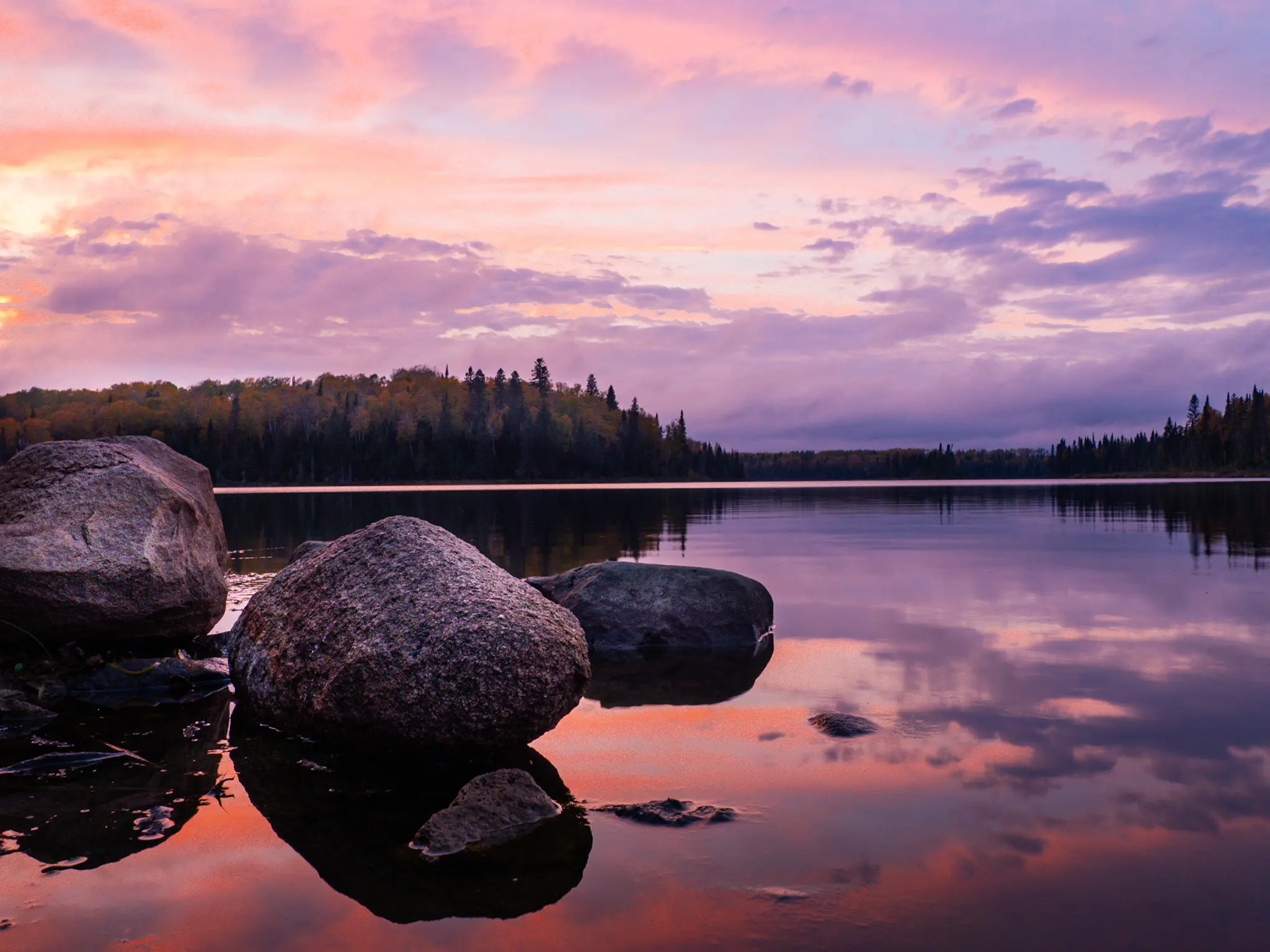
I photographed a rocky lakeshore shown above, where the stones were rough enough to scrape your fingers. That gritty texture made the lake feel massive by comparison. The reflection above it mirrored the trees, and the whole scene pulled the viewer in layer by layer. Dropping down to ground level made the rocks feel almost like characters.
Negative Space – The Power of Simplicity
Negative space is one of those ideas that seems too simple to matter, until you see how dramatically it changes a scene. It’s the empty room around your subject, such as the open water, the pale sky, the stretch of fog. It looks quiet, but it speaks loudly.
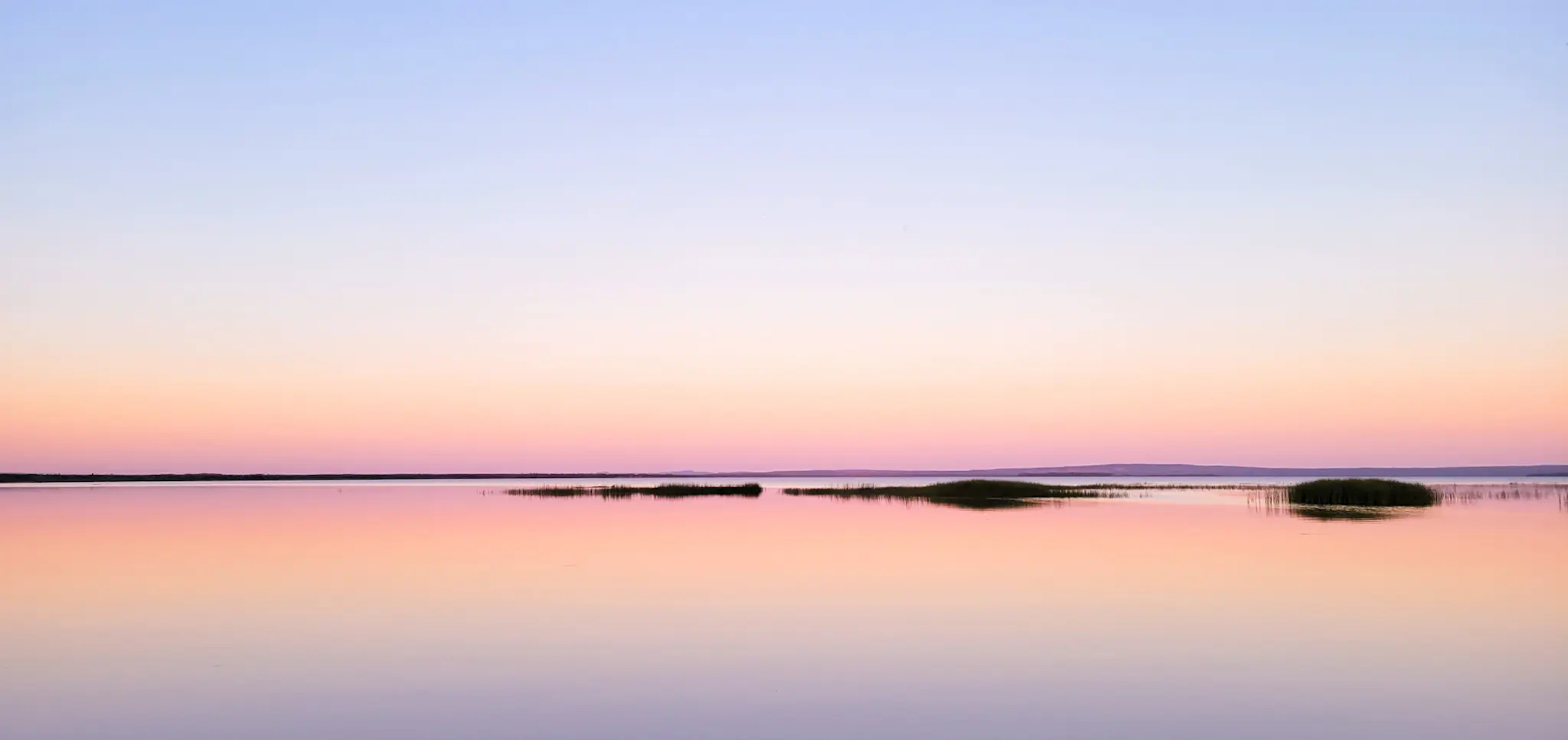
The negative space gives the eye a place to rest. It creates mood, isolation, and scale. When used intentionally, it can turn the smallest foreground subject into the star of the image, resulting in unexpectedly beautiful images.
As shown in the photo above, there was a moment on Lake Superior where three small islands sat alone in an expanse of calm water. No busy textures or crowded trees, just wide, uninterrupted space. People linger on that kind of image because it feels peaceful and enormous at the same time.
Avoiding Clutter – Knowing When More Becomes Too Much
Some scenes fall apart not because of what’s missing, but because everything is competing for attention. It’s the extra stuff that sneaks in and steals attention: stray branches, messy backgrounds, patches of distraction. Anything that pulls the eye away from the main story is a distracting element.
A quick trick I use: when reviewing a photo, pay attention to where your eyes land first. If it’s not your intended subject, something needs shifting. Sometimes, crouching a little lower removes the distracting ground clutter. Sometimes lifting the camera hides noise behind a cleaner sky. Checking the edge of the frame is one of the simplest and most effective composition tips you will ever use.
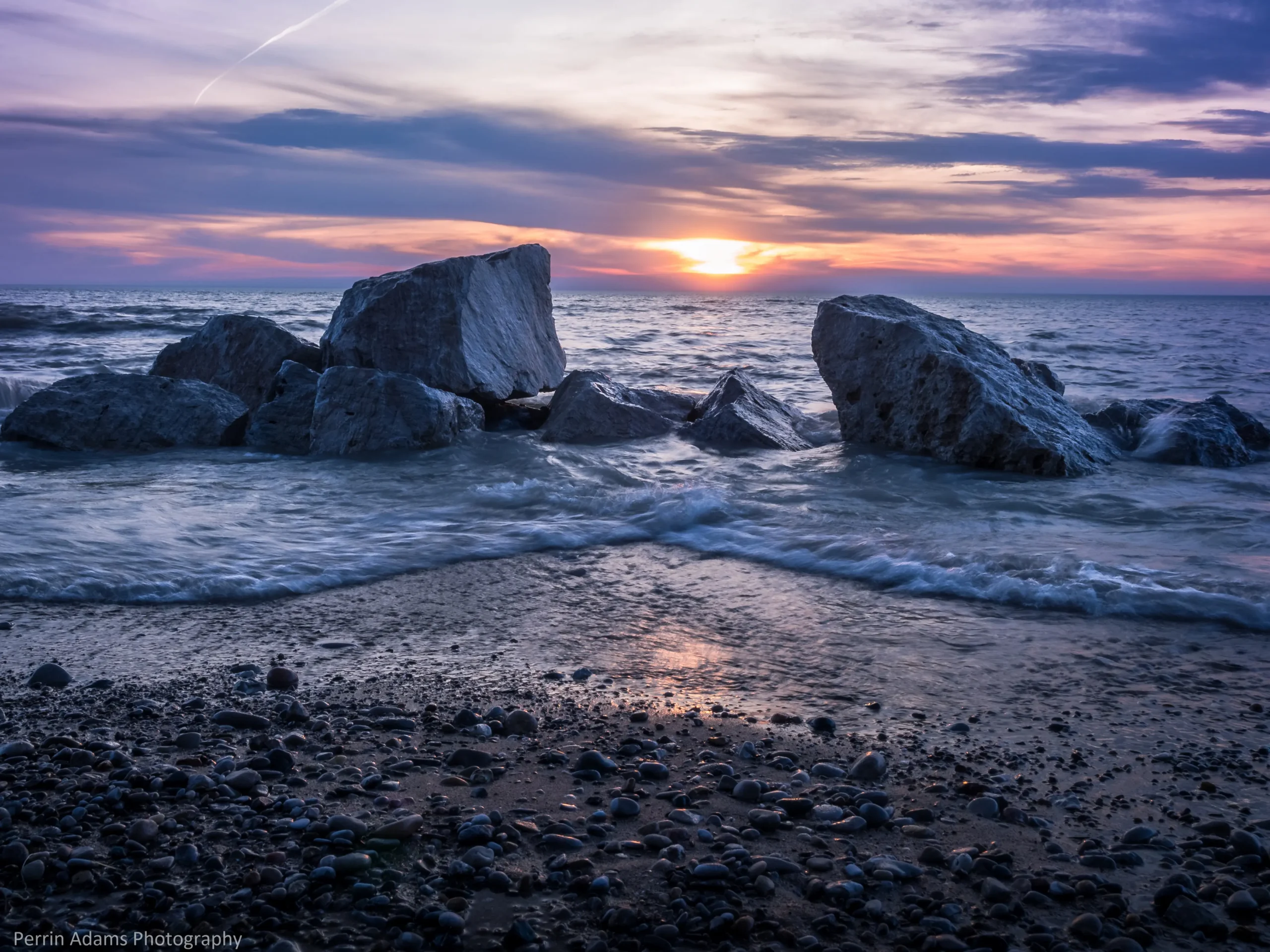
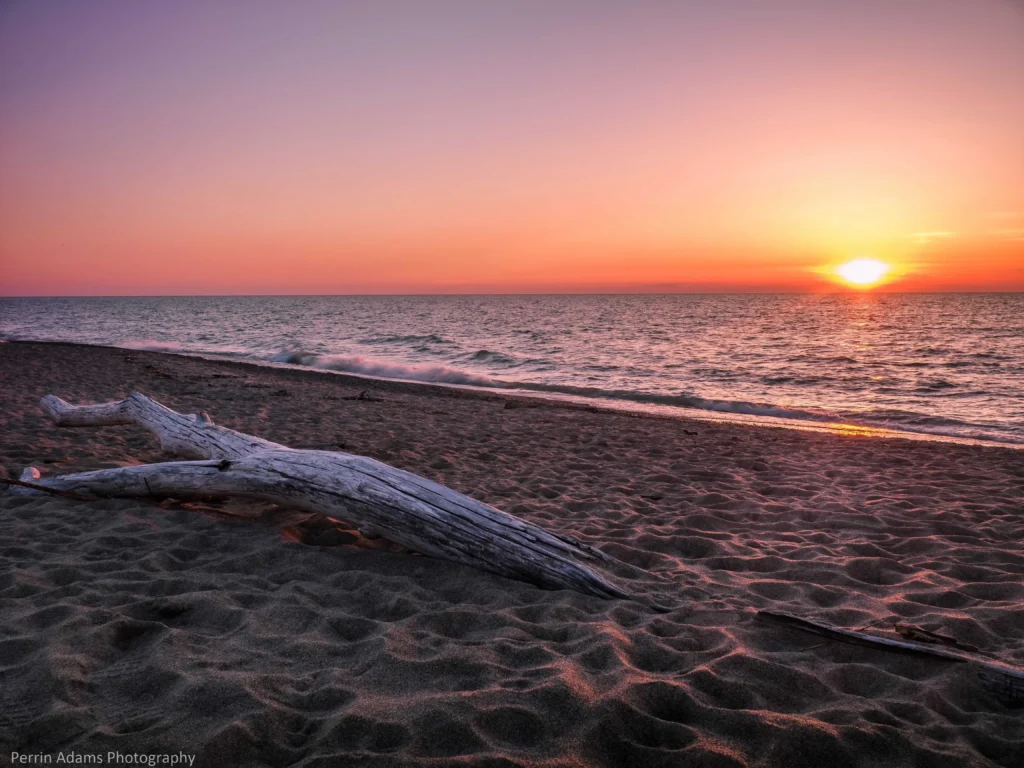
Not all clutter is bad. Forest scenes filled with branches, logs, and uneven grasses often feel richer because of that wildness. I took the beach photo above early in my journey, where the foreground is full of stones and driftwood, but every piece supported the story. Nothing felt accidental, and the various elements played together nicely.
Advanced Composition Techniques
When you have mastered the basics, these subtle techniques start showing up naturally, almost without trying.
Combining Techniques without Overthinking
The funny thing about composition is that the best images often use several techniques at once without you noticing. You might have a leading line guiding the eye into a scene framed by trees, with symmetry dancing across the water and the horizon sitting neatly on the rule of thirds, all working together to create images that feel intentional and cohesive.
Building Layers of Interest
Foreground, midground, background: these layers give structure to a landscape. Even simple scenes gain depth when the viewer feels like they are stepping into space instead of looking at a flat surface.
The Emotional Side of Composition
Symmetry calms, leading lines energize, and negative space slows everything down, and foreground details make the viewer lean in. Composition is emotional long before it’s technical, and sometimes you refine it further in post-processing, but it still starts at the moment you click the shutter.
Practical Tips for Building Better Compositions
Over the years, a few simple habits have made the biggest difference in how my compositions come together.
1- Scout Before You Shoot
Checking photos online, browsing satellite maps, or taking a quick walk with your phone helps you understand what angles might work before you arrive with all your gear. You will notice how clouds can shift a scene or hide parts of your background.
2- Shift Your Perspective
A few steps to the left, kneeling lower, or raising the camera two feet higher. These tiny changes can transform a cluttered frame into a clean one. It’s amazing how often the fix is just one small movement to better capture what you are seeing.
3- Practice Patience
Great compositions rarely happen the moment you arrive. Light changes, people walk through the frame, shadows shift. Being early helps, and being patient pays off. Take this as friendly advice from someone who has rushed too many shots.
Seeing Composition as a Living Language
Composition isn’t a set of rules pinned to a wall; it’s something you feel as you photograph. Once these techniques become familiar, the landscape starts revealing its own structure. Tree branches suddenly look like frames, waterlines become arrows, and rocks become stepping stones through the image.
The more you practice, the more instinctive it becomes. Eventually, you will catch yourself noticing compositions even when you don’t have a camera with you, the true sign that you are beginning to learn to capture landscapes through thoughtful composition.
If you would like to learn more in detail, join my Landscape Composition Class, where I break everything down step-by-step, with live demonstrations and real-world examples. It’s the perfect next step if you are ready to strengthen your eye and elevate every photo you take.