But when you’re out there under the stars, it feels like you’re visiting old friends again, you know?
Mark James Ford
You can also listen to this episode with Mark on iTunes, Pocket Casts, Spotify, Castbox, and Google Podcast
Connect with fellow photographers and interact with the host, Perrin, gain access to monthly photo contests, discover daily inspiration, and much more!
Interested in contributing? Visit our Supporter page to find out more
Built by photographers. Shaped by you.
We are building a new home for photographers, a platform that does not sell your portfolio, bury your shots, or tell you what to shoot next. You do. Community, podcast, Prime Classes, and a pro listing service on the way, all shaped by the photographers who use it.
Joining is completely free until December 2026. After that, a free layer stays for everyone, so you keep access either way.
Become a beta tester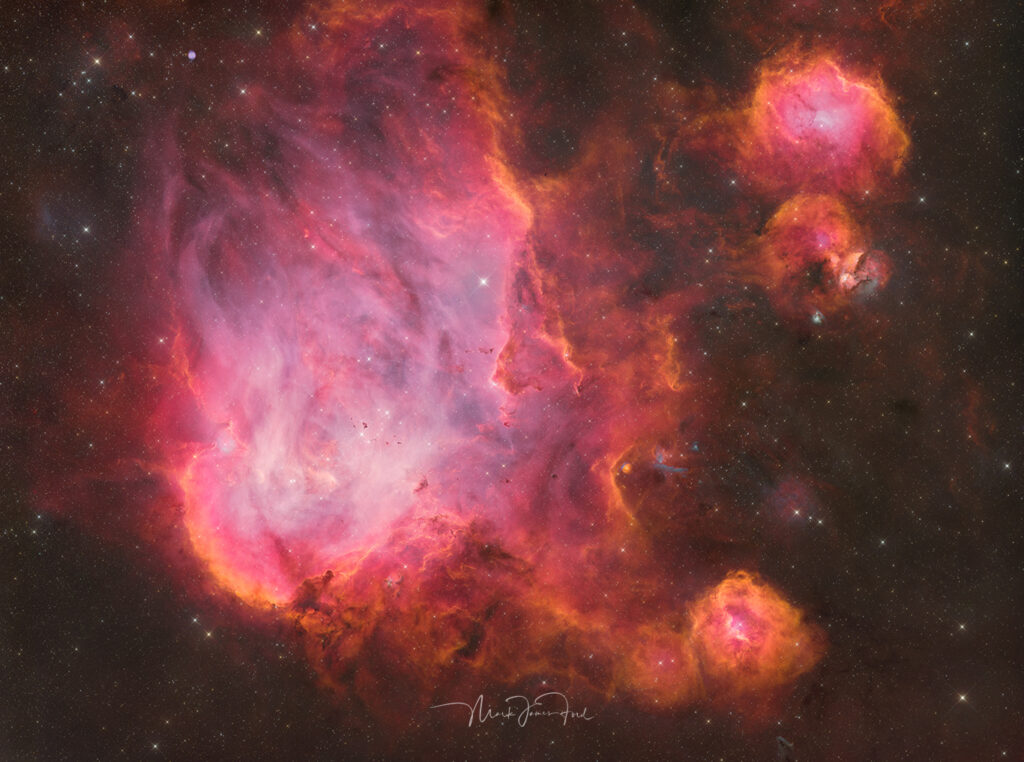
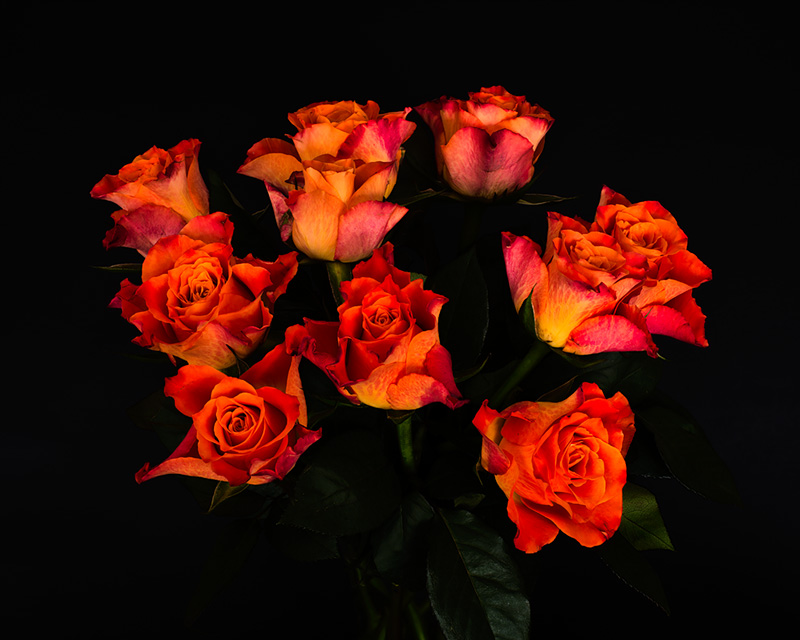
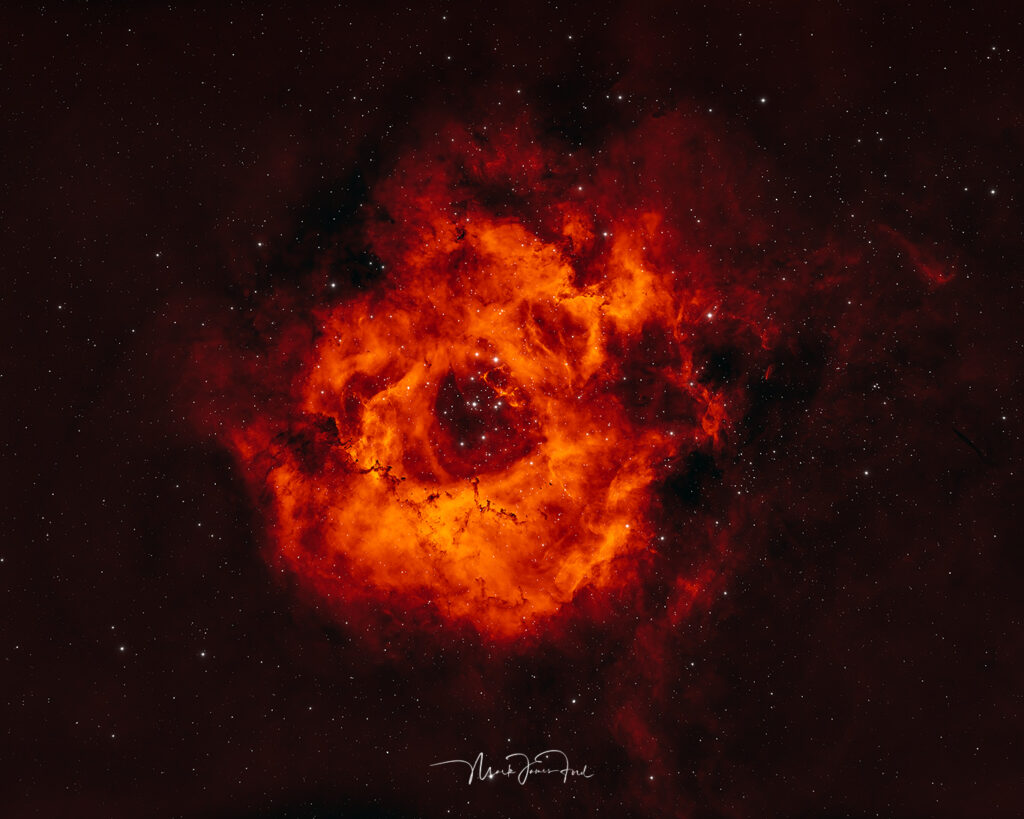
A rose fits in the palm of your hand. Turn it, breathe in, and you’ll get nothing, because this particular hybrid was bred for shape and lost its scent in the trade. Now point a telescope at the Rosetta Nebula: 130 light years across, a number too large to mean anything. Mark James Ford put those two images side by side in an essay and asked the same question of both. Is this beautiful, or just technically impressive?
Mark trained as a chemist, and he’ll tell you no other art form demands a deeper understanding of chemical process than photography. His first camera work happened in a darkroom at a school that didn’t even teach photography, fully kitted out by someone years earlier, where a teacher told a teenage Mark to just use it and impress him with the results. Photography started for him as producing an image through film chemistry, not taking a picture, long before he ever thought about composition.
Everything since has followed that same order. He learned Photoshop 3 before he owned a digital camera, finishing images before he knew how to capture them. A panorama he once rolled out on a gallery floor, because it was too long for the table, caught two customers’ attention and turned into his first exhibition before he’d said a word to the gallerist. A Sigma camera with an unusual sensor introduced him to the woman who’s now his wife, Ines. Their first trip together was to Iceland, where they caught the northern lights reflecting off a glacial lagoon.
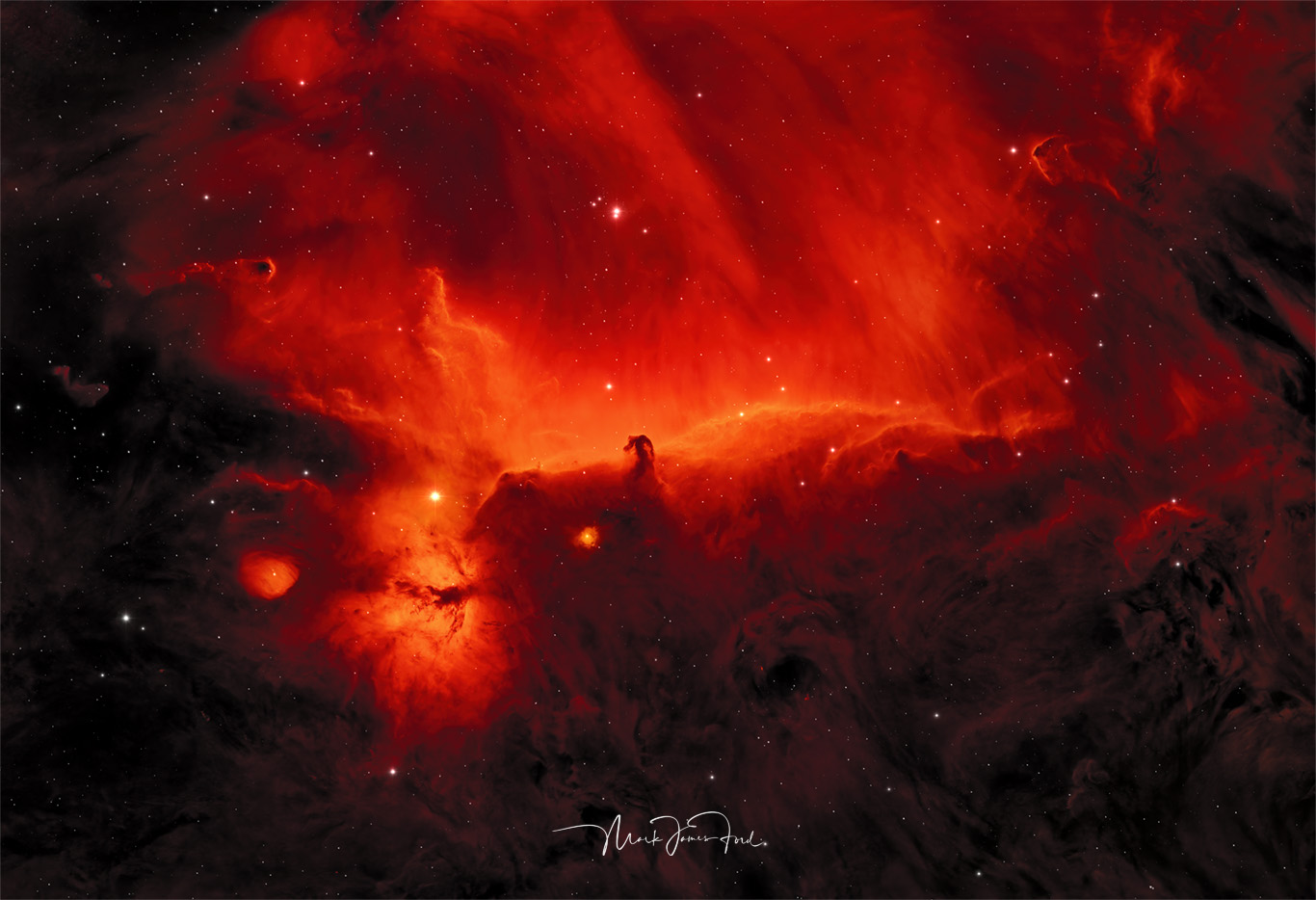
Astrophotography came out of a video camera with a heat sink built in. Mark realized the same feature that kept it from overheating during long recordings could hold a long exposure of deep space. The first time he pointed a telescope at Orion, the Horsehead Nebula appeared on the screen, badly out of focus, and it was enough. He was looking at light a thousand years old.
Now Mark and Ines build images together from raw data, some of it pulled from remote telescopes on the other side of the world, and they don’t always follow the conventions of the genre. Several of their finished nebula images push past the muted, scientifically correct color balance most astrophotographers aim for, toward something more saturated and deliberately artistic. In 2023, Mark went through eight months of chemotherapy and surgery for cancer. He says the appreciation for beauty was already there. The diagnosis, and the photography since, only made it sharper.
Here’s some of what we get into:
- How a school darkroom, at a school that didn’t teach photography, shaped the way Mark still approaches every image
- The panorama that ended up framed on a gallery floor, and how that accident led to his first exhibition
- Why a video camera’s heat sink became his unlikely entry point into astrophotography
- The essay comparing a rose bred for shape over scent to a nebula 130 light years wide
- How he and Innes work through the same raw data differently, and why that tension makes the final images stronger
- The choices behind how “true” a nebula’s colors should look, and why they’ve chosen to override that convention more than once
- How facing cancer in 2023 reshaped his relationship to beauty and to the work itself
Enjoy the episode.
Q: What first drew you into astrophotography?
Mark: It’s always been something I was interested in anyway, but what triggered it was a Sigma camera that came out a few years back, primarily designed for video. Most DSLRs, after about thirty minutes, get pretty warm and need a break, but this camera had a heat sink built into the back, so it could shoot for hours without overheating. I thought, well, there’s another use for a camera that doesn’t overheat, and that’s astro. It isn’t an astro camera at all, it doesn’t talk to any astro equipment, but I put a setup together anyway. On the first trip, I’m standing in the middle of a field trying to assemble all of this for the first time, in the dark, in the cold, in February. I point the telescope near Orion and take a picture, and there on the screen is the Horsehead Nebula, totally recognizable. The picture wasn’t even focused properly, there were a hundred technical errors along the way, but I thought, this is going to work. I’m taking a picture of something a thousand light years away. This light is a thousand years old, and I’m looking at it now, live. It totally blew me away.
Q: What made owning a telescope in Namibia worth it instead of just subscribing to remote data from other observatories?
Mark: First of all, it’s totally dark sky, really dark. It’s around two hundred kilometers from the capital, and there’s nothing else out there, so it’s a true dark sky. You’ve got all the southern constellations too, things like Eta Carina, amazing targets you simply can’t see from the northern hemisphere. But the real thing is, you can collect data every night. It lets you work on targets you just can’t manage otherwise, even if you travel there yourself and set up for a week. You’re still limited by that timeframe, and if you come back without enough data, you’re not going to produce a finished image. Owning the remote setup takes that limit away.
Q: What’s some advice you’d give to someone who wants to start exploring the cosmos through photography, something you wish you’d known when you were starting out?
Mark: It depends whether photography is the driving factor or whether the appreciation of the cosmos itself is. If you think this is something you want to do, it’s relatively straightforward to buy some data off the internet and start learning to work with it. YouTube is full of training videos that can take you as deep as you need to go. But stay with your own strengths. If you’re a Photoshop expert or a Lightroom expert, whatever software you’ve worked with for years, make sure that’s where you finish the images. Once you like the results you’re producing, that’s when you can start looking at what equipment is actually available and what you want to photograph, because you’ll end up with very different gear depending on whether you’re chasing the moon and planets or faint distant nebulae. There are plenty of ways to dip your toes in the water without stepping too far from what you already know, and the more you can stay inside your own frame to begin with, the easier it’ll be to get into it.
🔗 Connect with Mark James Ford
🧭 What We Talked About
🧪 A Chemist Behind the Lens
- Mark’s path into photography started in a school darkroom, where a teacher simply told him to use it and see what he could produce, so his very first lessons were about developing film, not taking pictures.
- His background as a trained chemist still shapes how he thinks about the medium, since he sees film photography (and even the light physics behind a glowing nebula) as fundamentally a chemical process.
🌆 City Skylines to Sigma
- His photography journey actually started with city panoramas, hand-stitched together from individual frames of skylines like New York and Frankfurt, before software existed to do it for him.
- Frustrated by how weather-dependent travel photography could be, he moved into panorama film, then searched for a digital equivalent and found Sigma’s Foveon sensor, which became his signature tool.
💑 Meeting Ines
- Mark met his partner, photographer Ines Mondon-Ford, through the Sigma community, and their first trip together (chasing the northern lights in Iceland) doubled as their first date.
- The two now run astrophotography.art together, and Mark describes their creative partnership as a genuine synergy, each pushing the other toward images neither would have landed on alone.
🔭 Falling for the Cosmos
- Astrophotography began almost by accident, when Mark realized a Sigma video camera’s built-in heat sink meant it could shoot long exposures without overheating.
- His first attempt, pointed at Orion in a cold February field, produced a recognizable Horsehead Nebula and hooked him instantly on the idea of photographing light that’s a thousand years old.
🌹 Beauty at an Impossible Scale
- One of Mark’s essays compares a hand-held rose to the Rosette Nebula (roughly 130 light years across), arguing that when something is too vast to comprehend, beauty has to be judged by color, shape, and form instead of size.
- He also draws a parallel to how the modern hybrid rose lost its scent in exchange for its shape, much like a photograph can only ever capture what’s visible, never what’s felt in person.
🔧 Building a Deep-Sky Image
- Mark walked through the full process: capturing (or buying) raw monochrome data, stacking exposures to boost signal over noise, then assigning color to narrowband filters in Photoshop rather than staying inside dedicated astro software.
- He and Ines run their own remote telescope in Namibia, chosen for its true dark skies and access to southern-hemisphere targets unavailable from Europe.
💬 Advice for Aspiring Astrophotographers
- His top tip is to start by downloading sample data online and processing it in whatever software you already know, rather than investing in gear before you know if you enjoy the process.
- He also stressed that the telescope mount matters more long-term than the telescope itself, since a weak mount becomes the real limiting factor as your ambitions grow.
🌌 Why He Keeps Looking Up
- Mark shared that in 2023 he went through eight months of chemotherapy and surgery for cancer, and that the experience sharpened his appreciation for the world in a way that’s never faded.
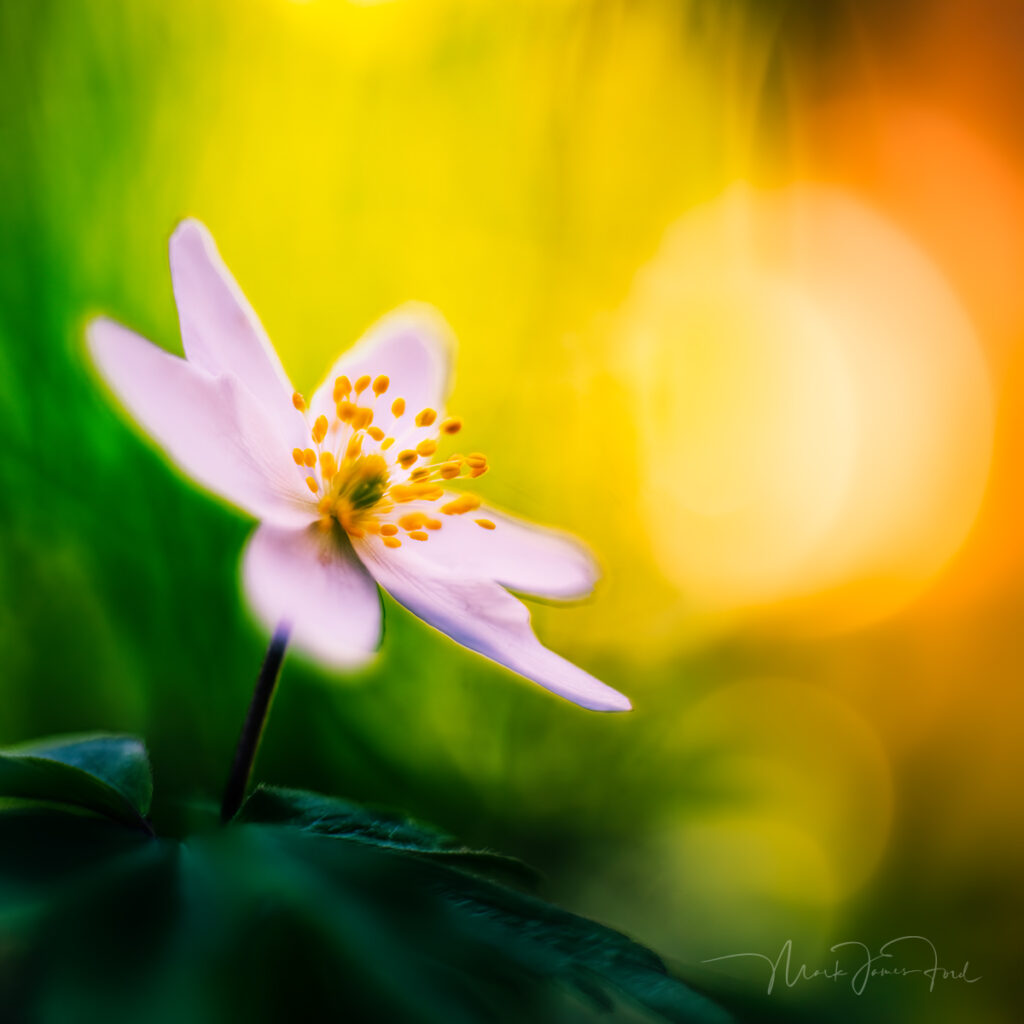
- He’s currently working almost exclusively with an antique Meyer-Optik-Görlitz Orestor lens, and he loves how the bold, saturated colors of his astro work are now bleeding into his macro photography, connecting the two sides of his portfolio.