There’s always something new to explore and learn.
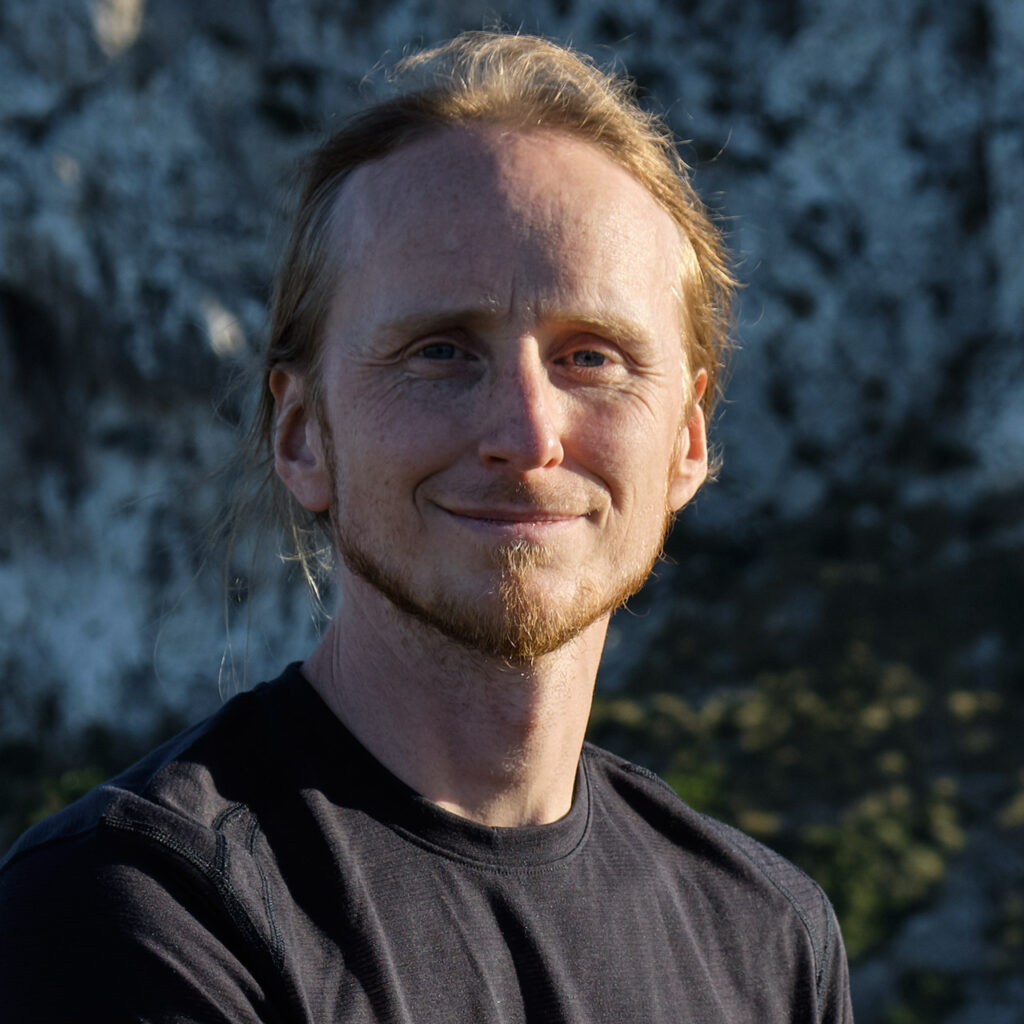
Michael Breitung
You can also listen to this episode with Michael on iTunes, Pocket Casts, Spotify, and Castbox.
Connect with fellow photographers and interact with the host, Perrin, gain access to monthly photo contests, discover daily inspiration, and much more!
Interested in contributing? Visit our Supporter page to find out more
Built by photographers. Shaped by you.
We are building a new home for photographers, a platform that does not sell your portfolio, bury your shots, or tell you what to shoot next. You do. Community, podcast, Prime Classes, and a pro listing service on the way, all shaped by the photographers who use it.
Joining is completely free until December 2026. After that, a free layer stays for everyone, so you keep access either way.
Become a beta tester
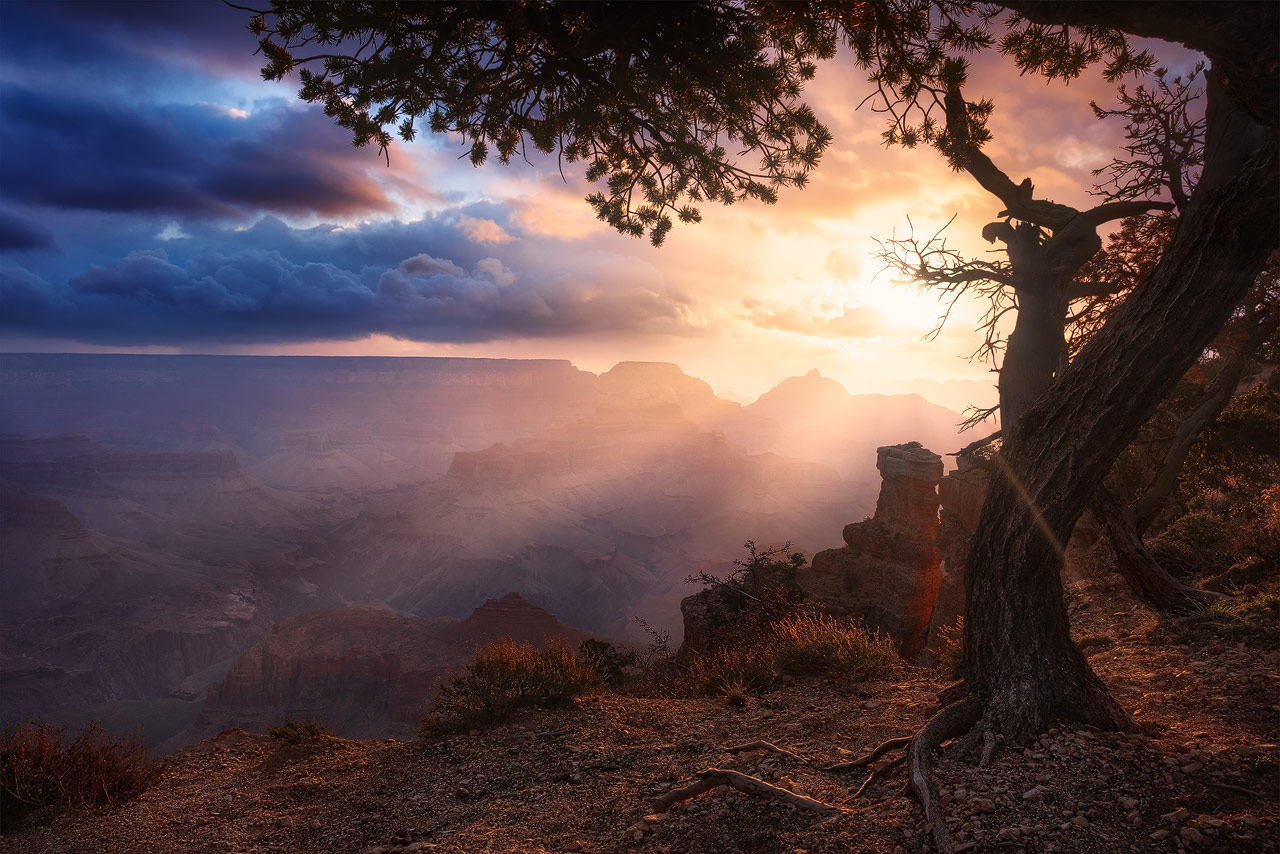
It’s before dawn on the South Rim of the Grand Canyon, and Michael Breitung has gotten up at four in the morning, driven a short way to Yaki Point, and is now walking through the dark with a flashlight, looking for a composition he should have scouted the evening before. He finds a tree. The sky turns dramatic, the light breaks just right, and he takes a photograph that is still, seventeen years later, one of his favorites.
That trip almost didn’t happen with a camera at all. Michael’s first real pull toward photography came from editing, not shooting. Back around 2005 he was already deep into Photoshop, building composites out of free stock images just for the fun of it. He eventually picked up a point and shoot simply to have his own material to edit, with no real sense of lighting or composition yet. By late 2008 he’d bought his first DSLR, and a few months later he made the trip to the Grand Canyon that turned landscape photography from a curiosity into something he couldn’t put down.
Michael has been a software engineer for twenty years, and he still is one. That’s not an accident. Early in most photographers’ careers, there’s an assumption that going full time is the finish line, the place all the work is quietly building toward. Michael tested that assumption directly. A few years ago he and his girlfriend quit their jobs to travel with an open-ended plan, and he used the time to find out what photography actually looked like as a living. He learned fast that the mindset shifts: the wandering and exploring gets replaced by a running tally of what will sell, what will get views, what the stock agency needs next. He and his girlfriend eventually went back to their jobs, and Michael says he enjoys photography more now than he did when he was trying to make it pay the bills.
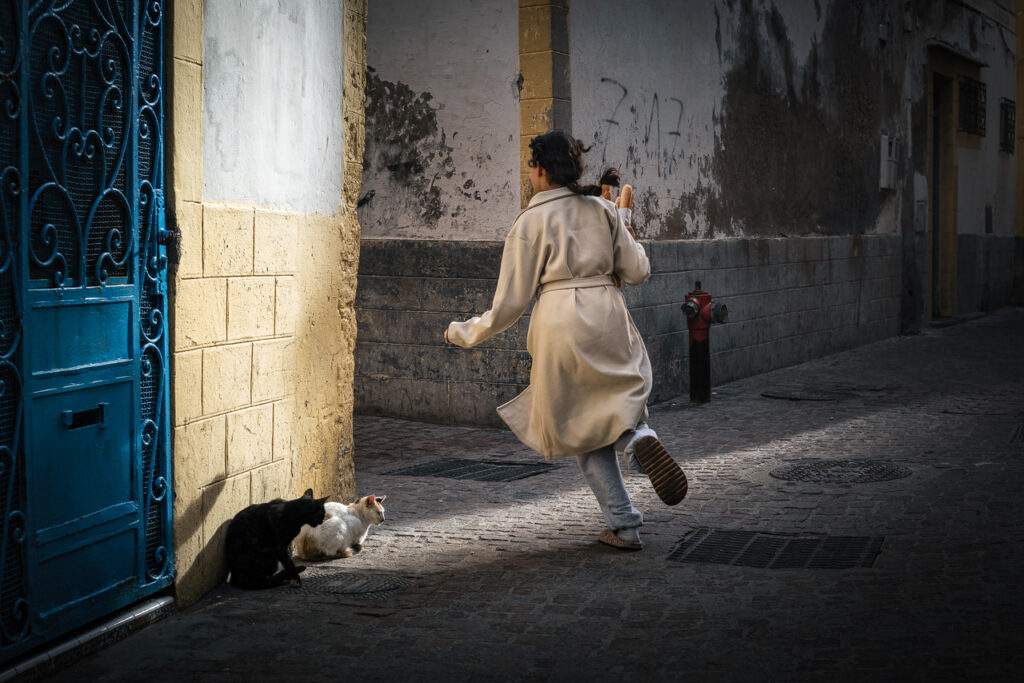
Since then his work has spread across six continents, though landscape photography has stayed the anchor. He’s also been experimenting more with street photography in recent years, a discipline that asks something completely different of him. Instead of setting up a tripod and waiting for the light, he has to read a scene fast, and in places like Morocco, sometimes talk his way into a photograph at all. A six-month trip around the world in 2016 taught him something from a different angle entirely. During the South America stretch in particular, he went long weeks with nothing but clear, cloudless skies, and no dramatic photograph to show for it. He came home having learned that being out there mattered more than what he walked away with, a lesson that still shapes how he shoots today.
Here’s some of what we get into:
- Why Michael has stayed a software engineer for two decades and never made the leap to full-time photography
- What happened when he and his girlfriend quit their jobs to test what full-time photography actually felt like
- The 2009 Grand Canyon trip and the photograph that started everything
- How a run of clear, cloudless skies during his 2016 trip through South America changed the way he measures a good trip
- His recent shift into street photography, and what it demands that a tripod and a sunrise never do
- The philosophy behind the yearly workshops he runs through the Moroccan desert
Michael treats photography like something to keep, not something to chase, and that shows in how deliberately he’s built his life around it rather than the other way around.
Enjoy the episode!
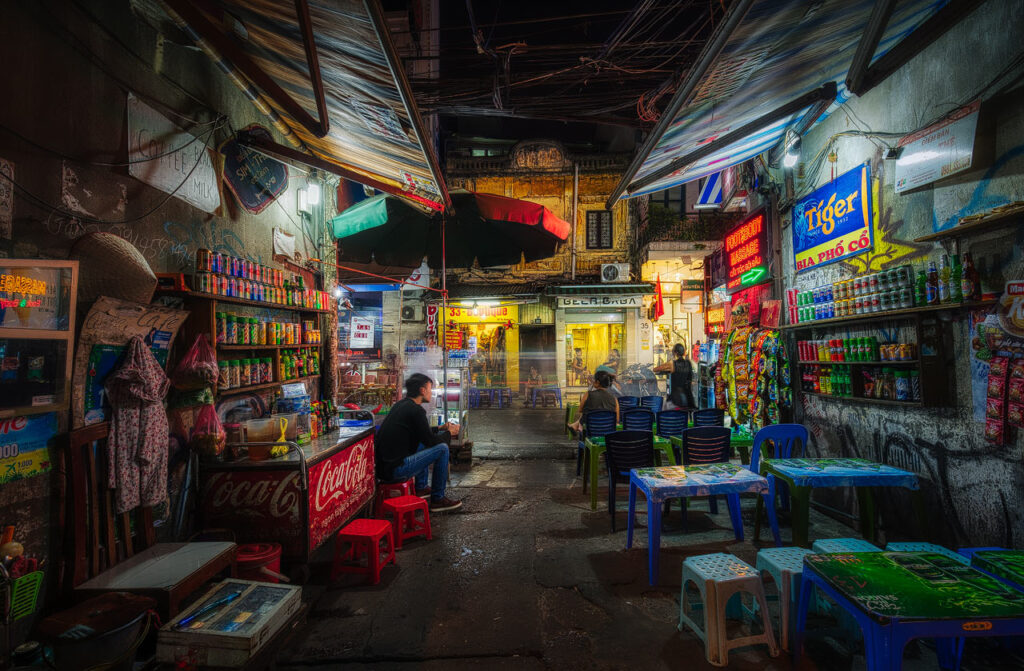
Q: How do you know when you’ve captured that atmosphere and emotion in a photo, rather than something that just looks good or is technically accurate but doesn’t feel like anything?
Michael: Sometimes you just take the photo, look at the back of the camera, and you want to shout and jump. There are those few photos where you just know, you’ve captured the atmosphere, you’ve captured something special. There’s an example, a photo I took last year in Germany. There’s a castle that looks like a Disney castle, Neuschwanstein. I went there on a golden autumn evening, and there was haze in the distance. I zoomed in, took the photo, and looked at the back of the camera, and I already knew, this is exactly how it feels this evening. The castle, the golden light, the photo just radiates that warmth. So there I just knew it right when I took the photo. But that’s not always the case. Quite often I only know when I open the photos on the big screen and start tinkering with the sliders. And very often it just doesn’t work at all. To be honest, most of the photos I take don’t even end up in my portfolio, because they don’t evoke that feeling I felt. It’s how I react to the photo first. I like the viewers to react that way too, but I can’t control that. I know how I react to the photos. There’s no formula for this. It’s an emotional thing.
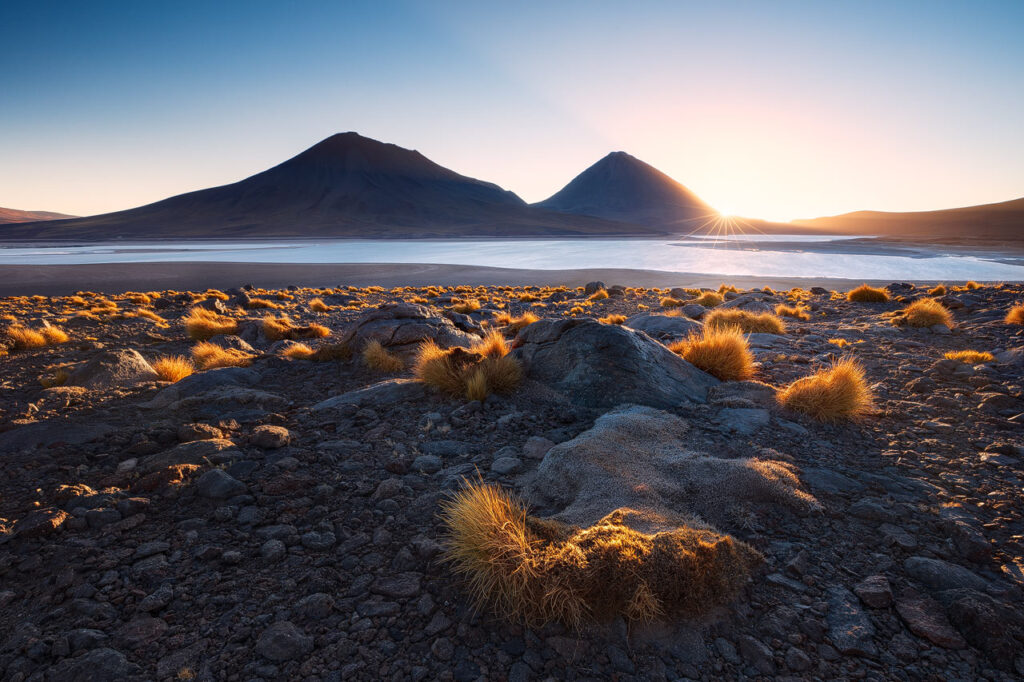
Q: Where do you personally draw the line when it comes to editing? What is too much editing for you?
Michael: The line for me is, if you put something in a photo that wasn’t there, if I drop in a dramatic sky from some other photo or from stock imagery, I don’t do that. I’d rather return to a place multiple times until I get the conditions I want. If another person sees a photo of mine and figures out where it is and goes there, he’ll find what’s on the photo. The weather might be different, the light might be different, but it will be clear, he finds what he sees in my photo. I hate when that’s not the case. There’s a place in Vietnam, in Mu Cang Chai, a valley. When you look at the photos online, it looks like huge mountains, rice terraces on each side. But when you actually go there, it looks completely different. Still beautiful, but stuff like that, I don’t do to my photos. At some point I did an editing exercise, I had a photo where I put in artificial fog, just to get some good content for YouTube. But since then, I returned to the forest a couple of times until I got it with proper real fog, because that feels much more satisfying in the end. So you could say I feel uncomfortable if I do too big alterations.
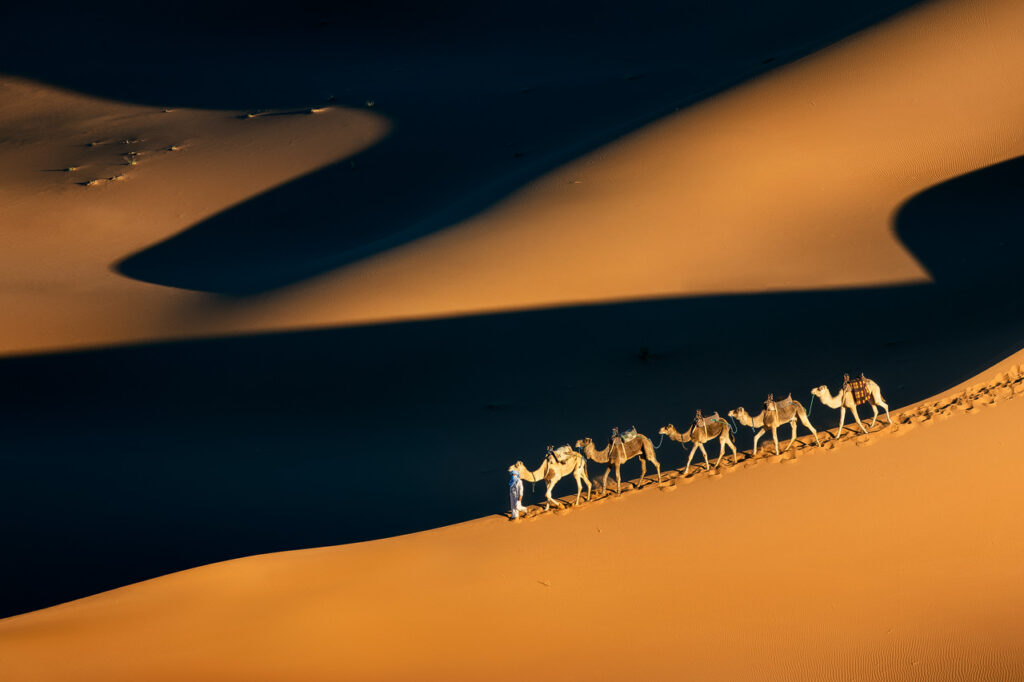
Q: What has changed since 2019 in Morocco? Are there more people, do you have to be more careful about the spots you choose?
Michael: In the south, when we go to the desert, it’s still pretty remote and manageable, but I’ve noticed it’s getting more popular, more photographers going there. In the desert, the most important thing is always pristine sand, and the more people that visit, the more footprints you have. Some of the more popular dunes get a lot of visitors from the surrounding camps in the evening. I’m always looking at the Windy app the days before we go to the desert, and when I see fifty kilometer an hour winds the day before, I’m happy, because I know everything will be free of footprints. Otherwise we just walk a bit farther. Also, in the cities, it’s always been touristy, but I feel like in the next years, up to the World Cup, there will be much more going on. I see more influencers promoting Morocco. It’s the typical thing that happens, you have a beautiful country with beautiful cities and landscapes, so it’s natural it becomes more popular. I’m glad I’ve been there already so many times.
🔗 Connect with Michael Breitung
🧭 What We Talked About
🎼 Early Journey / Origins
- Michael’s path into photography started with editing, not shooting, since he was making composites in Photoshop before he even owned a camera.
- He credits the online community The Radiant Vista (later The Mindful Eye) for teaching him composition and editing through daily critiques and tutorials.
- He bought his first DSLR, a Canon 40D, in late 2008 ahead of a work trip to Las Vegas.
- A self-planned road trip to the Grand Canyon in 2009 produced the photo that hooked him for good, an early morning shot at Yaki Point he still counts among his favorites.
- He describes catching what he calls the “landscape photography virus” on that trip.
📖 Philosophy / Vision / Storytelling
- Michael has deliberately never gone full-time with photography, choosing to keep it separate from his 20-year career as a software engineer.
- A trial run of full-time photography during an open-ended trip taught him that chasing income shifts the mindset from exploration to obligation.
- He returned to his day job afterward and says he enjoys photography more now than when he was trying to make it pay.
- A six-month trip through South America in 2016, much of it spent under blue, cloudless skies, forced him to shift from valuing outcomes to valuing the process itself.
- He knows a photo has worked when it gives him an immediate emotional reaction back at the camera, something he describes as having no formula.
📷 Tools, Gear, and Behind the Scenes
- His personal editing line is never adding anything to a scene that wasn’t there, so no composited skies or borrowed elements from other photos.
- If a location doesn’t deliver the conditions he wants, he returns repeatedly rather than fabricating them in post, including reshooting a forest scene for real fog after once faking it.
- He practices what he calls “time blending,” combining a foreground shot from blue hour with a Milky Way shot taken hours later from the same static camera position.
- Small, technical fixes like removing power lines or a stray pathway are fair game, and he’ll use AI tools for that kind of minor retouching.
- A long lens has become central to his kit, especially in Morocco, where he says he rarely takes it off anymore.
🔁 Practice, Teaching, Platforms
- Michael runs a yearly photography workshop and tour through Morocco with the company Wild Morocco, a partnership that grew out of his own first trip there in 2019.
- He’s built a full set of known locations over repeated visits, which frees him up during workshops to focus on guiding rather than scouting.
- His long-form YouTube tutorials walk through complete editing workflows from RAW to final image, but he deliberately withholds the source files.
- His goal in teaching is for people to understand the reasoning behind each edit rather than copy his workflow step for step.
💬 Advice, Creative Strategy, or Challenges
- His advice to photographers balancing a career and a creative passion is to get good first and let money follow later, not the other way around.
- For anyone weighing a full-time jump, he recommends a real trial run, like a half-year sabbatical, to test the business side before committing.
- He’s watched other photographers he once followed quietly stop shooting altogether, and his own long-term goal is simply protecting his enjoyment of the craft.
🌍 Influences, People, Brands, or Places
- The Grand Canyon remains the location that first hooked him on landscape photography back in 2009
. - South America, particularly Bolivia, Chile, and Ecuador, reshaped his entire mindset during his 2016 travels.
- Morocco has become a recurring creative home since 2019, both personally and through his yearly workshop.
- He pointed to Vietnam’s Mù Cang Chải as an example of how over-edited photos online can set expectations that don’t match reality on the ground.
🔮 What’s Next for Michael
- He’s heading to Norway in September, chasing a long-held goal of photographing the northern lights.
- His yearly Morocco workshop with Wild Morocco continues, with the next tour already planned.
- He’s actively exploring newer creative territory, including street photography and a growing interest in wildlife photography sparked by a past trip to Costa Rica.