Photographers are seeing more curiosity and excitement than fear when it comes to AI.
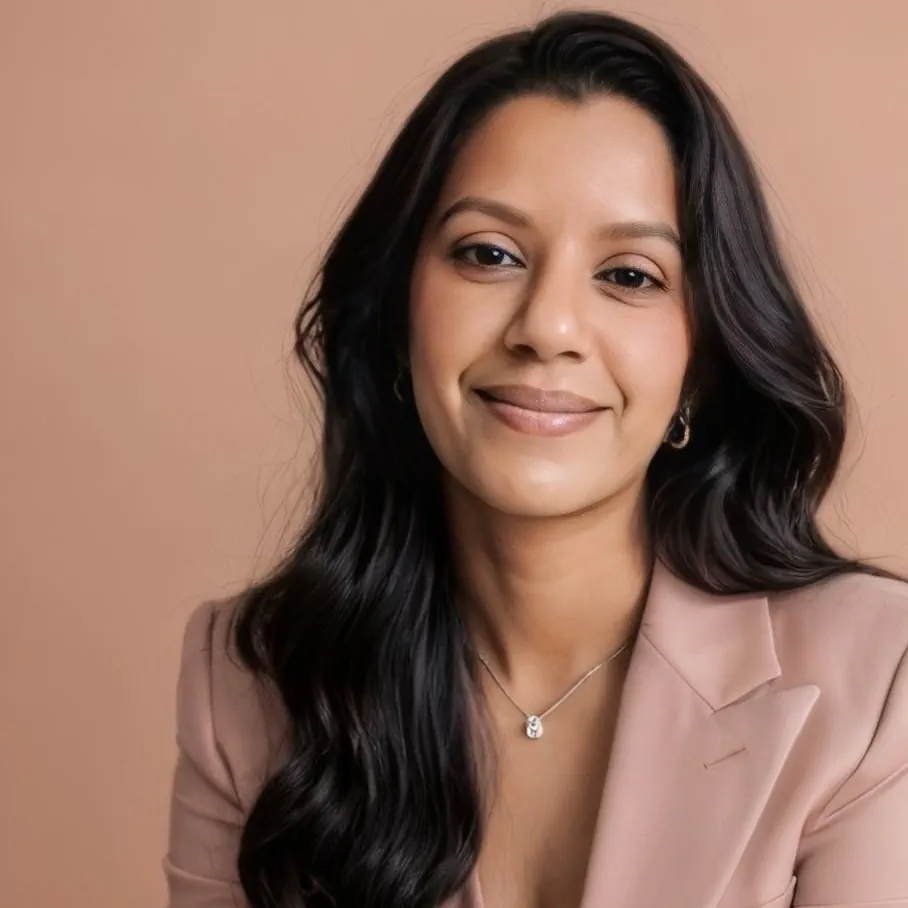
Anjali Banthia
You can also listen to this episode with Eric and Anjali on iTunes, Pocket Casts, Spotify, and Castbox.
Connect with fellow photographers and interact with the host, Perrin, gain access to monthly photo contests, discover daily inspiration, and much more!
Built by photographers. Shaped by you.
We are building a new home for photographers, a platform that does not sell your portfolio, bury your shots, or tell you what to shoot next. You do. Community, podcast, Prime Classes, and a pro listing service on the way, all shaped by the photographers who use it.
Joining is completely free until December 2026. After that, a free layer stays for everyone, so you keep access either way.
Become a beta testerInterested in contributing? Visit our Supporter page to find out more
Most conversations about AI and photography generate a lot of noise and not a lot of answers.
You’ve got people convinced it’s going to transform the industry, and people convinced it’s going to hollow it out. What you don’t have much of is actual data telling you what photographers are really doing with these tools on any given Tuesday.
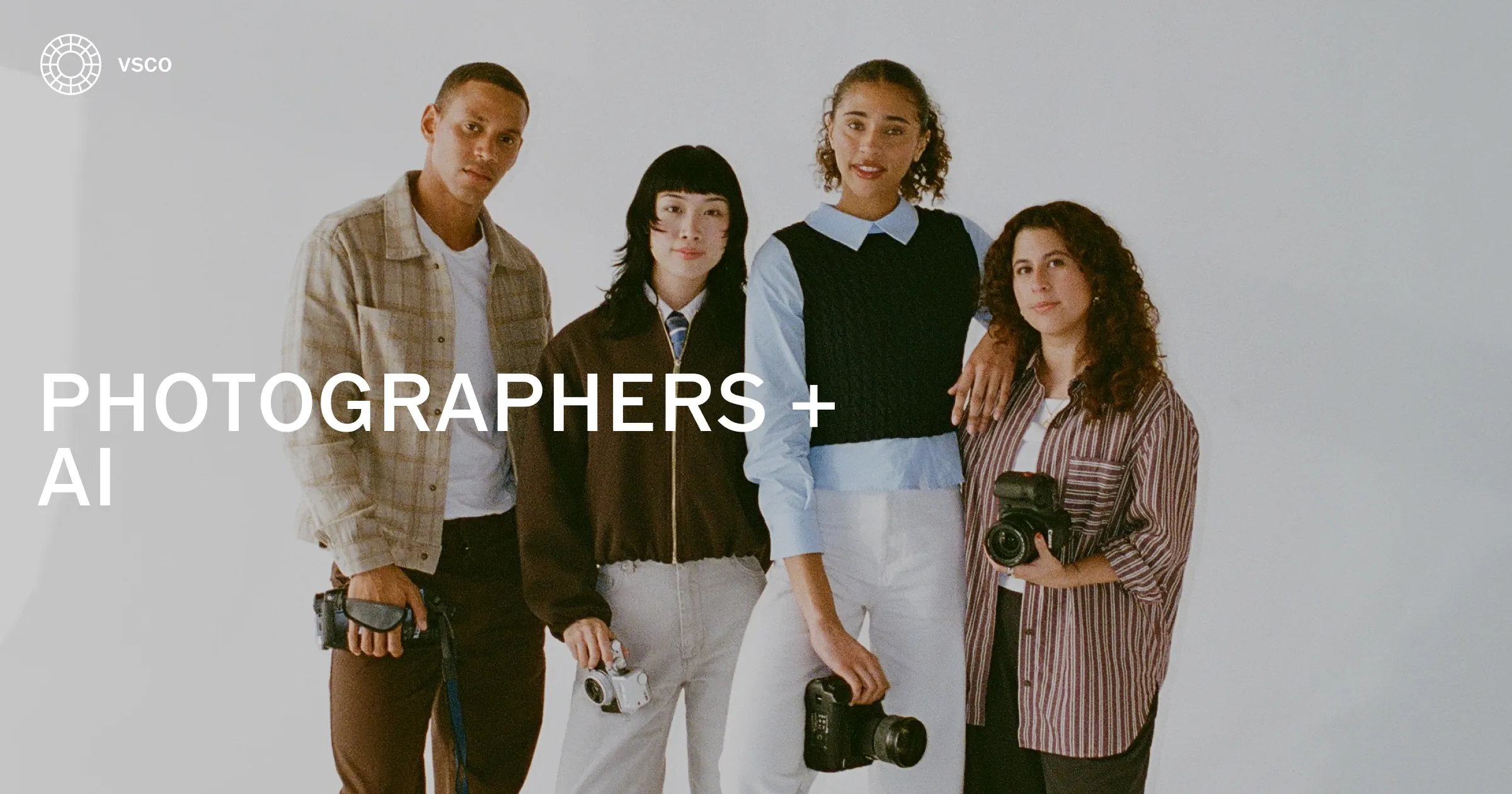
That’s the gap VSCO set out to fill. Eric Wittman, VSCO’s CEO, and Anjali Banthia, their lead researcher, surveyed 401 photographers across a wide range of genres and experience levels, working professionals and enthusiasts alike, all independent of VSCO’s own user base. The goal was straightforward: cut through the noise and find out where photographers actually stand with AI right now.
What they found might surprise you. Adoption is broader than most people assume. The loudest fears tend to cluster around generative AI and the idea of being replaced, but that’s not where photographers are actually spending their time with these tools.
The more interesting story is happening further down the workflow, in the parts that have nothing to do with making images at all. Client communication, culling, portfolio management, business automation. The research found that somewhere between 25 and 50 percent of a photographer’s working time goes toward non-creative tasks, and that’s where a lot of the real opportunity sits.
It’s also where a lot of the real anxiety sits. Working photographers, the ones with the most to gain and the most to lose, are both the most active adopters and the most concerned. Loss of creative control. Questions around ethics and intellectual property. The fear of looking inauthentic to clients in a business that still runs almost entirely on word of mouth.
This episode gets into all of it.
Here’s some of what we cover:
- Why the data directly contradicts the dominant narrative that photographers are resistant to or ignoring AI.
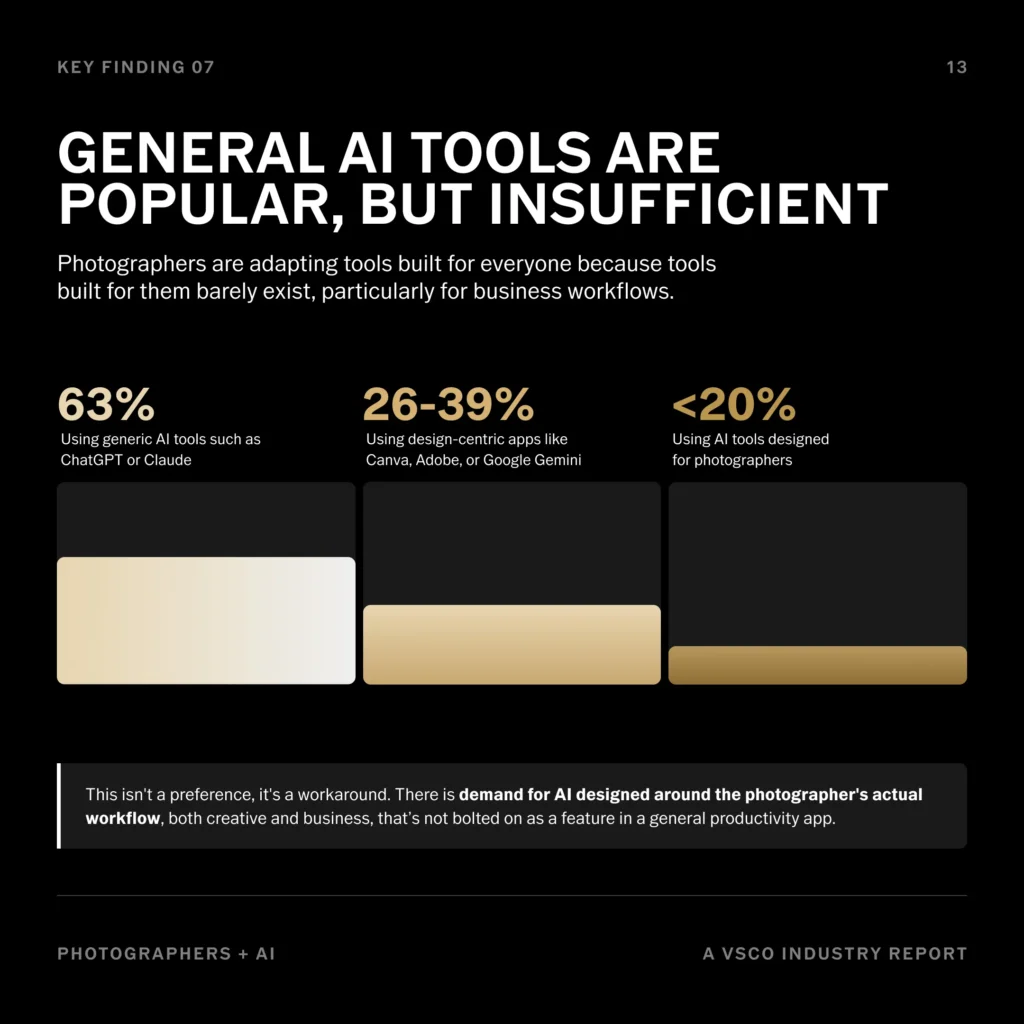
- The finding that fewer than 20% of photographers are using tools actually built for them, and what that gap reveals.
- Why working photographers hold more concerns than enthusiasts but are also adopting AI at a higher rate.
- The business case for AI that most photographers haven’t fully considered yet.
- What photographers actually want from a creative partner, and why the image itself remains the last place they want AI involved.
- How purpose-built photography tools differ from general platforms like ChatGPT, and why that distinction matters.
This chat involves real numbers, but Eric and Anjali bring enough context and candor to make it genuinely useful rather than just a data readout. If you’ve been trying to figure out where you actually stand on all of this, this one might answer some questions. Enjoy!
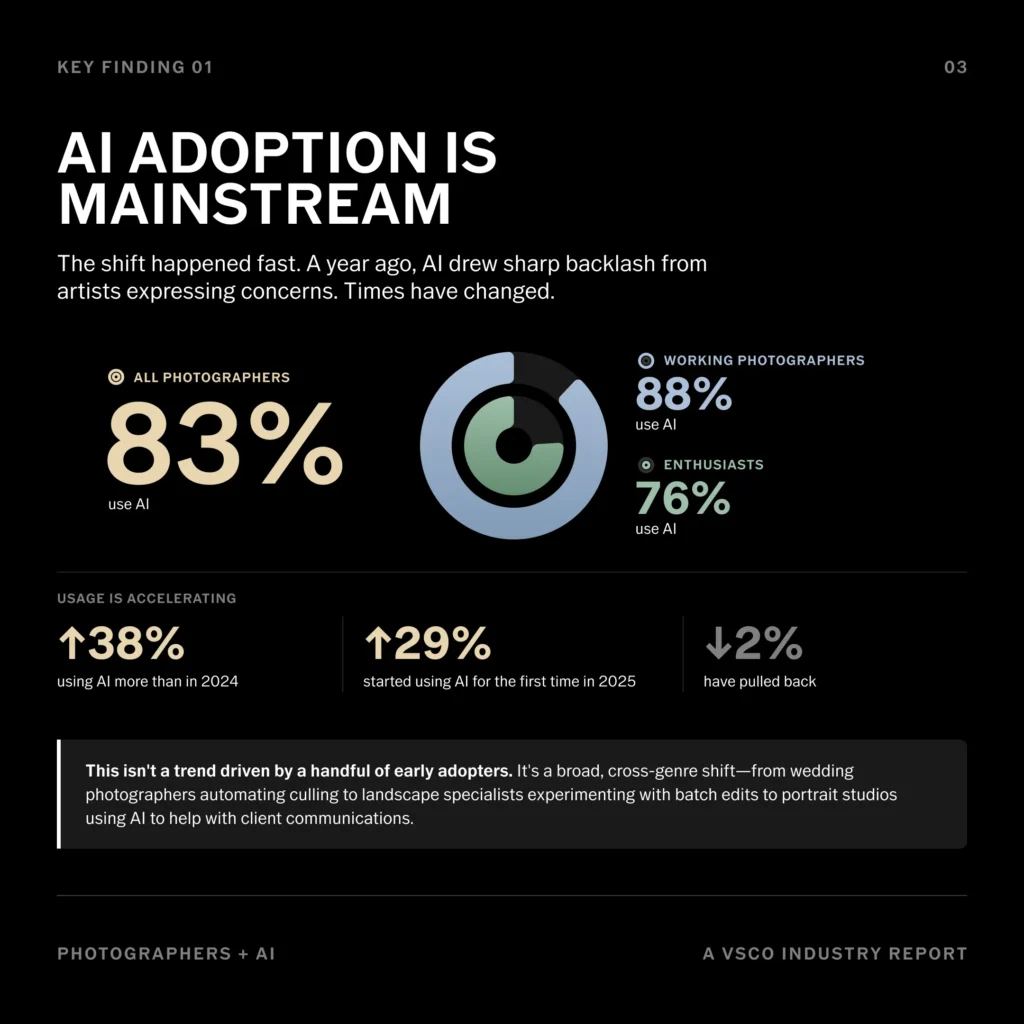
Q: What was the most common narrative about AI and photography that your data directly contradicted?
Eric: I think the number one perception that a lot of people had was that photographers are not using AI, or that it was dramatically negatively affecting their productivity and their business. And in reality, this research shows that there is a decent amount of adoption of various AI tools, maybe not in the way that people had been perceiving, and it showed a fairly decent breadth of uses across a lot of different tools. So I think what we’re proving with this data is that we’ve got some great usage, a fairly deep penetration across a number of different ways within the photography community. And now people are starting to have conversations like, “where are you seeing value, how are you using this?” Versus just experimenting with a bunch of random tools and spending an excessive amount of money on subscriptions in an era where photographers are already feeling fairly constrained.
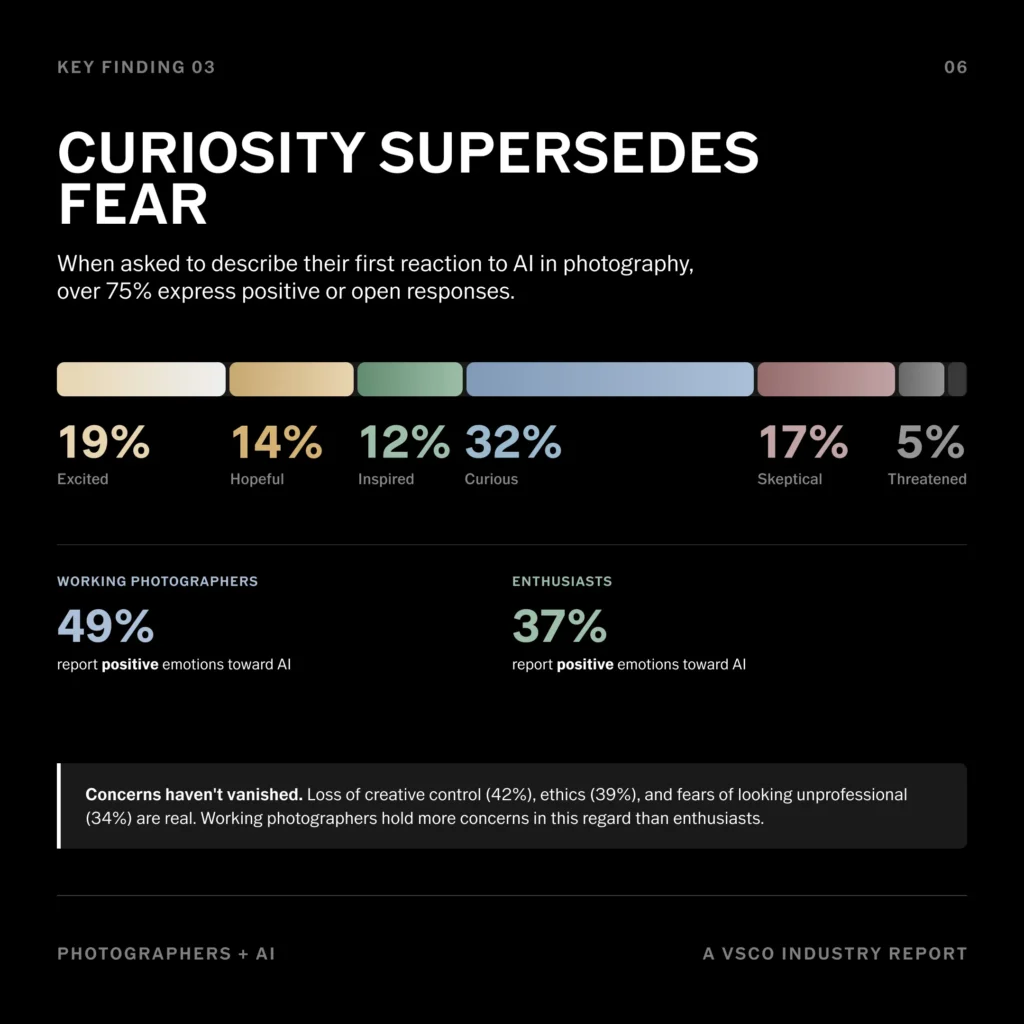
Q: The data shows that working photographers hold more concerns than enthusiasts, yet they’re also the ones most actively adopting AI. How do you reconcile that concern about loss of creative control with the overall optimism you found in the report?
Anjali: It didn’t surprise me that working photographers had more concerns about AI, it’s their livelihood. But what it shows me is that there’s an intentionality here. They’re thinking about AI holistically: “I’m optimistic, I see the hope and the potential, but I’m going to make sure this works for myself. I’m going to try it out, see what value it brings, what problems it solves, and how I can incorporate it into my own personal or professional style.” The right solutions in these spaces are going to be the ones that find a good balance, that still put creative control and that professional signature into people’s hands, but just enable them to do it faster, more efficiently, and with more support, while still retaining who they are.
Q: If this research changes one thing about how the industry talks about AI and photography, what do you hope that is?
Anjali: I think it’s that the conversation has shifted. We’ve seen enough data points and enough real examples from talking to our community that, although those fears are valid and maybe still are there, people are seeing a lot more curiosity and excitement than it may originally seem. So I hope what it means is that there’s more opening of possibilities, more openings of creativity. Will this actually bring out more creativity? Will it give people more space to create the best work they’ve ever done?
🔗 Connect with VSCO
- VSCO Website
- Full AI report: vsco.co/research/photographers-ai
- VSCO recently launched a campaign called “We Choose Photographers,” a statement that photography has never mattered more. Check it out and explore their full suite of tools at vsco.co/try/choose
📊 Key Numbers
- 83% of photographers surveyed are already using AI, and 29% started in 2025 alone.
- Only 5% feel threatened. Top emotions: excited, hopeful, inspired, curious.
- Nearly half spend 25 to 50% of their time on non-creative tasks.
- Top concerns: loss of creative control (42%), ethics/IP (39%), looking unprofessional to clients (34%).
🧭 What We Talked About
The fear narrative doesn’t match the data
- Only 5% of photographers feel threatened by AI, yet fear dominates online. Eric tied it to how social media algorithms reward emotional reactions, not representative ones.
- Historical parallel: the film-to-digital shift triggered the same fears. Things changed, but new opportunities followed. AI is the same pattern, moving faster.
Where photographers are actually using AI
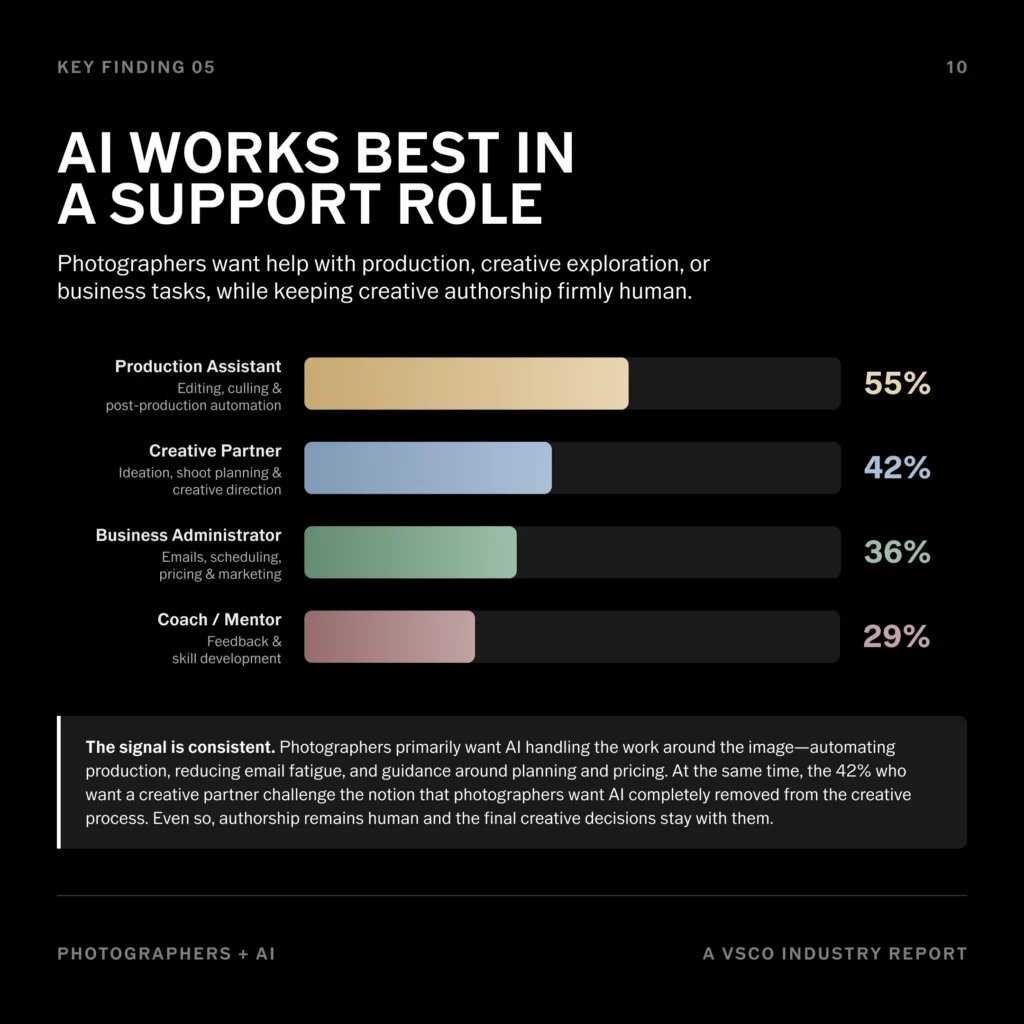
- Primarily on the business side: client emails, photo culling, portfolio updates, and intake/response automation, not image generation.
- Working photographers are the heaviest adopters. For them, time savings means more clients and more revenue.
The fragmentation irony
- In chasing efficiency, many photographers have added 2 to 4 new subscriptions, making workflows more complicated and expensive. Consolidation toward integrated, photography-specific platforms is the likely next chapter.
AI as expanded team, not replacement
- Eric’s frame: AI fills the roles you can’t afford to hire for, studio manager, copywriter, admin support. It frees you to focus on the work you’re actually best at.
- The report’s closing line: “Photographers are ready. The question is who builds for them.”
🔮 What’s Next
- VSCO has photography-specific AI tools in development, including smart editing and deeper workflow integration.
- Anjali plans to rerun the survey in a year to track how adoption and sentiment evolve.
- Full report: vsco.co/research/photographers-ai
You are not a user here. You are a co-builder.
The new Great Big Photography World is being built in the open, by the photographers in it. Join the beta, help decide what we ship next, and get in before everyone else. Your feedback shapes the platform, not an algorithm.
Free until December 2026, with a free layer for everyone after, so you keep access either way. No card needed to join.
Become a co-builder